Shop Press

Shop Press is the news and idea hub for everything related to working on cars and trucks, focusing on repair, technology, and wrenching lifestyle.

From the creative minds at:

FEATURE STORY

Hot Off the Press

Don’t Overlook the Elementary

Today’s article is one borne from experiences. Exasperating experiences, no less. All novice mechaniclets are taught engines need fuel, air, spark, and compression to run. This is true, but we often take those for granted, and diagnosing even one vehicle with a basic...

ADAS Alignment and Calibration – ASE Practice Question (VIDEO)

Description Technician A says that the thrust angle must be maintained at zero degrees when performing an alignment on many vehicles equipped with certain ADAS systems (like lane departure warning). Technician B says that the steering angle sensor must be properly...

Writers, Print Vehicle Service Histories for Every Vehicle

The fellas who taught me to write service were arguably some of the best I’ve seen do the job. They had all sorts of tricks up their sleeves, like the boomerang business cards you’ve read about before. Today, I’d like to share another tip my friend Sam gave me. It...

The JDM Class of 2001 Comes of Age

Japanese Domestic Market (JDM) cars during their heyday in the 1990s were the unattainable treasure, not for North American consumption, only accessible in video games. They were tantalizingly close but not truly attainable. Turns out all it takes is patience: 25...

Ferdinand Porsche: Engineering the Shape of Speed

Ferdinand Porsche is one of the earliest designers featured in our “Automotive Paragons” series, and few figures loom as large over the modern automotive world. His career began at the dawn of motoring itself, when horseless carriages were still experimental...

Service Writers: Don’t Leave Your Greatest Diag Tool in the Shop

Today’s piece starts with a one-question quiz that’s not a trick question: in your shop, what is your best diagnostic tool? It’s not a meter or a scan tool or a stethoscope, though those all are handy items to have nearby. It’s your technician. And as much as leaving...

How Does Regenerative Braking Affect Brake Wear?

by | Apr 9, 2026

We’ve come a long way since the days of rubbing wooden blocks against a wagon wheel to slow down a carriage. Modern braking systems are amazingly effective at halting several thousand pounds in a safe, controlled manner. The most common automotive braking technique is just an evolution of those early horse carriage brakes: press friction material against a rotating surface to slow and stop the vehicle. But EV and hybrid vehicles use another way to stop: regenerative braking.
tech looking underhood

A Porsche Taycan on a Hong Kong street. Photo: Maximus Beaumont on Unsplash.

What Is Regenerative Braking?

In simple terms, regenerative braking converts an electric drive motor into an electric generator. This “regenerative” process introduces resistance as rotational forces at the wheels are converted into electrical energy to be stored in the battery, and that resistance slows the vehicle. Think of it like a big rig “Jake brake,” except the wheel’s rotational motion is turned into electricity instead of noise. Hybrid and fully electric vehicles use regenerative braking as a means to recapture energy and funnel it back into the main traction battery. Most regenerative braking systems can be adjusted from light to heavy effort depending on a variety of conditions.

How Regenerative Braking Affects Brake Components

Since the electric motor is doing the stopping, that means brake pads and shoes are not used as much. While not completely a “use it or lose it” situation, a lack of friction braking use can cause problems with parts of the brake system:

  • Brake Pads/Shoes: Friction material on pads and shoes will last longer, but that is not always a good thing. Since the friction brakes may only be used in high-temperature panic stops, the surfaces can end up glazed, which means less effective braking. In extreme cases, the friction material can deteriorate or even separate from the backing plate on rare occasions.
  • Brake Rotors/Drums: Rotors and (in a handful of cases) drums will not wear down as fast, but they are extremely susceptible to corrosion over time. This is especially a problem in areas that use road salt or are exposed to salty air. Without regular use, surface rust can build up, leading to pitting, brake noise, or a pulsing pedal when they are finally used.
  • Calipers/Wheel Cylinders: Since they are used less often, caliper and wheel cylinder pistons can stick in their bores. Corrosion can build up as well, making the situation worse. Caliper slide pins may freeze, and pads may get stuck in their guides. These issues may not be noticed until a situation where they are needed the most.
  • Brake Fluid: For the most part, brake fluid is not affected by regenerative braking itself, but it also cannot be ignored. Brake fluid is still hygroscopic and will continue to absorb water over time, even if the friction brakes are rarely used. That’s why it needs to be tested on a routine basis and flushed as stated in the owner’s manual.
motorcycle safety

Electric vehicle dashboard display metrics. Photo: Tom Fisk from Pexels.

Why Brake Maintenance Still Matters

Even though regenerative braking takes a great deal of the stopping effort away from traditional braking components, it does not mean that friction brakes do not need maintenance. Just because brake pads or shoes are still within the thickness spec does not mean that the entire braking assembly is in top shape. Instead of rotors and drums wearing out, they can develop corrosion that makes them less effective when needed the most. If the physical friction brakes are only used in emergency situations, pads and shoes will not have enough grip to stop effectively.
automotive crash and fender bender

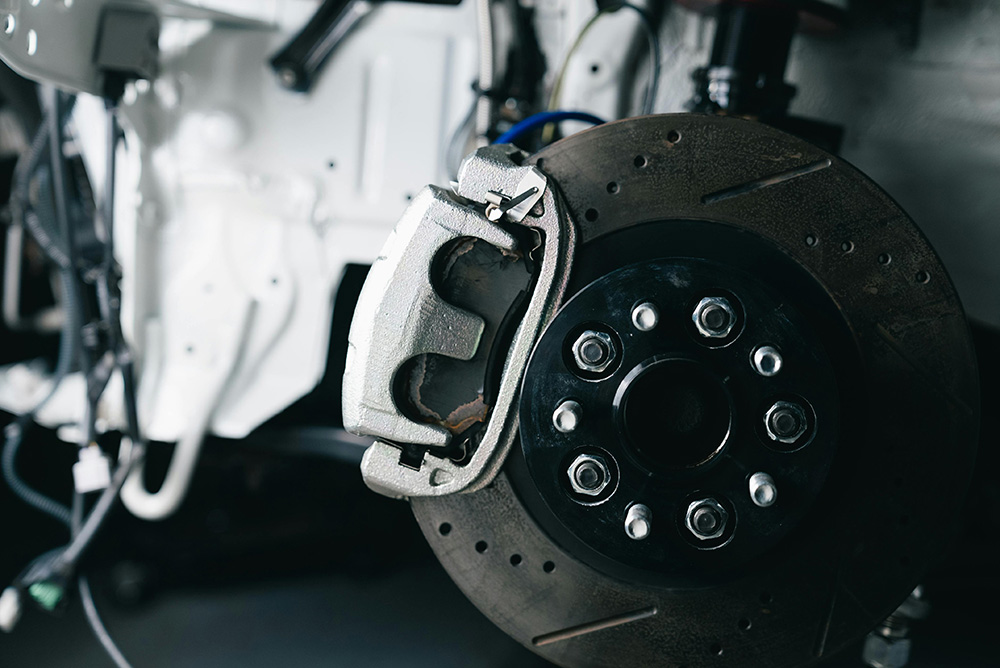
Car brake caliper and disc. Photo: Erik Mclean from Pexels.

Some automotive manufacturers have built-in automatic braking routines that apply the mechanical brakes during certain situations to help prevent problems later on. For regenerative braking-equipped vehicles, it is critical to follow the OEM brake inspection and maintenance procedures. A typical EV or hybrid brake service may include a complete disassembly of the braking components, cleaning, inspection, lubrication (where necessary), and reassembly. Techs, make sure to apply the friction brakes while test-driving a hybrid or BEV. That ensures that the system sees some engagement and can also alert you to an issue that can be relayed to the customer.

Regenerative braking delivers clear benefits in efficiency and component longevity, but it also shifts how technicians need to think about brake system health. Reduced wear doesn’t equal reduced responsibility—if anything, it means inspections must be even more deliberate to catch corrosion, sticking hardware, and degraded friction surfaces before they become safety concerns. By staying proactive with maintenance and following OEM guidelines, techs can ensure that hybrid and EV drivers get the best of both worlds: the energy‑saving advantages of regenerative braking and the reliable stopping power of a well-maintained conventional brake system.

The articles and other content contained on this site may contain links to third party websites. By clicking them, you consent to Dorman’s Website Use Agreement.
Related Articles

Shop Press Comment Policy

Participation in this forum is subject to Dorman’s Website Terms & Conditions. Please read our Comment Policy before commenting.

Subscribe
Notify of
guest
0 Comments
Newest
Oldest Most Voted
Inline feedback
View all comments