Don’t try to (needlessly) upsell me.

Writers, Print Vehicle Service Histories for Every Vehicle
read more



Don’t try to (needlessly) upsell me.
Disclaimer: This chemical was purchased at full retail price at the expense of the author, with no compensation from the retailer or manufacturer to write about the item.
Be honest: do you always check the manual for the correct grade of factory-recommended sealant on every fastener you touch? Even if you’re a “by the book” type, the answer is probably “no.”
And that is where today’s product, Permatex 25240, better known as orange thread locker, comes in. According to Permatex, Permatex High Strength Removable Orange “is a hybrid formula that combines the strength of a Permatex Red Threadlocker with the removability of a Permatex Blue Threadlocker. Permatex Orange provides high strength for heavy-duty applications, but unlike Red Threadlocker, it can be removed with hand tools and does not require heating to achieve removal. Ideal for high vibration applications such as power sports, heavy equipment, automotive, and industrial applications. With 3X the strength of Blue Threadlocker, Permatex Orange Threadlocker ensures that pieces will not loosen or back out over time. Permatex High Strength Removable Orange Threadlocker is also available in a gel formula. Threadlocker gel formula provides “liquid-reliability” without drips, globs, mess or waste.”
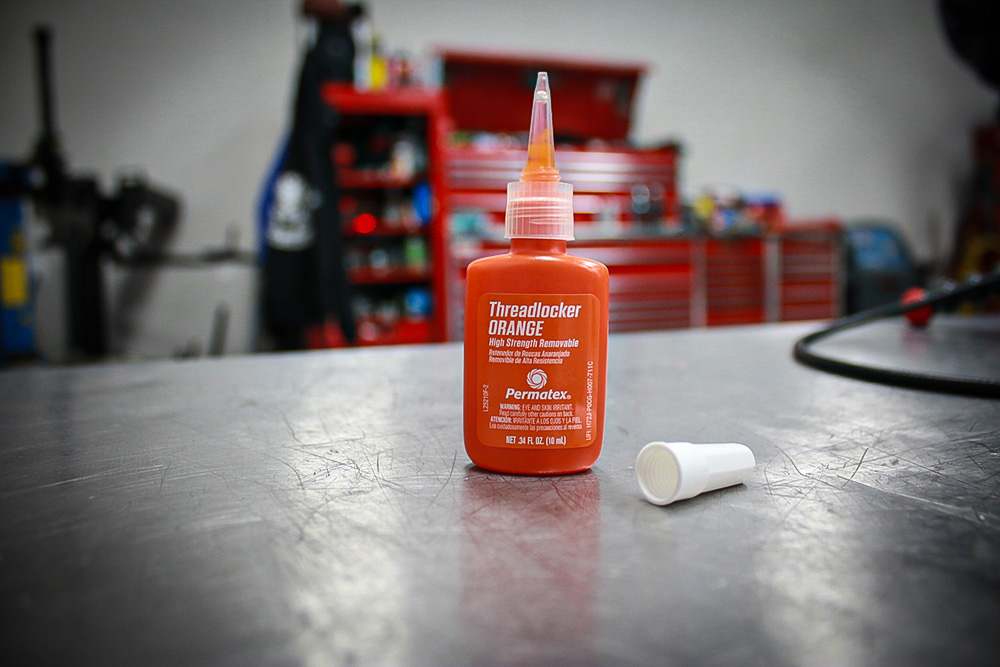
Photo: Jonathan Roth.
Well, that sounds promising. The strength of red with the ease of blue’s removal? We all know there are different grades of each, but speaking broadly, that sounds like a magic bullet, doesn’t it? There’s probably not a lot to talk about in terms of actually using this product, but the scenarios and equipment that might get it bear some discussion. And then, of course, the results, as unscientifically as we will measure them, do matter a bit.
This was purchased immediately after receiving some counterfeit Henkels Loctite, which exposed what may be the first bonus you’ll encounter before you even open the container: it doesn’t seem that Permatex’s product is counterfeited as often as Henkel’s, which is sort of a nice surprise benefit.
Thread locker efficacy is hard to measure scientifically. For instance, Permatex recommends prepping fasteners with their Permatex Surface Prep activator, but frankly, not a lot of us do that or even will consider it. Heck, many of their own product videos eliminate this step. Most of us will brush the threads off, clean ‘em up well, and remove grease using alcohol or a similar agent.
Next, what should we even measure to determine how well this stuff lasts? Breakaway torque to remove? That’s maybe something we can observe, but there are many variables that come into play including chemical application amount and area, thread condition, fastener size and thread pitch, torque spec of the fastener in question, accuracy of measuring device and then of course, time in service and the severity of said service.
If that’s your thing, here’s a video of someone who tried to quantify this, but questions arise from the small sample size and possible lack of anaerobic conditions.
Rather than try to measure any of that stuff, generalities might be more helpful, because in many cases, orange thread locker simply is not recommended. As discussed in the article open, many times it’s being used in place of the correct product or no product at all.
So generalities will apply, but they are data points—anecdata, if you will. Tested applications for this ranged from motorcycle brake disc retainers and sprocket bolts to a tractor’s starter housing fasteners to a car’s wiper motor mounting screws. One common theme was all those areas undergo severe vibration, though some were tested static, then removed and checked. After that, threads were cleaned, the locker reapplied, and the fasteners reinstalled.
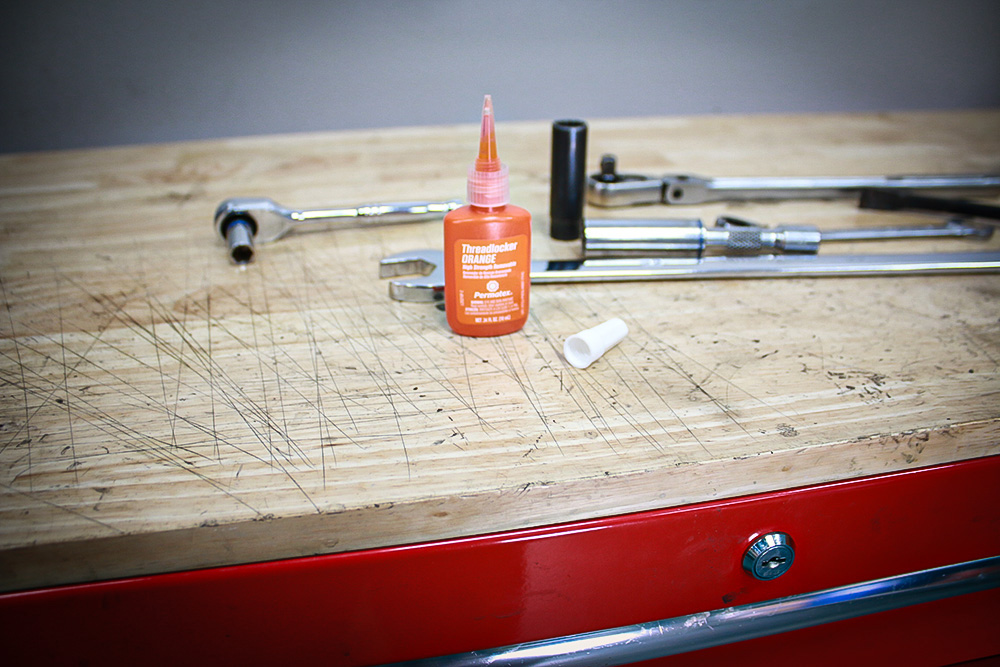
Photo: Jonathan Roth.
In general, the claims made by Permatex were true: the holding power was better than medium-strength (normally blue) thread lockers and didn’t require heat like high-strength formulas (most of those are red) for removal. The thread locker works as advertised. And, as claimed, it really does shine where vibration is an issue. It’s an excellent choice where field serviceability is a consideration. Literally, this stuff would be helpful in a field (or on the side of the road) where a torch may not be readily accessible, but a repair needs to be made.
None of this was tested scientifically; instead, it was more along the lines of “Oh yeah, that ain’t going anywhere,” and then rechecking that on the way out. But if there are tons of variables anyway and if thread prep isn’t exactly lab-grade, well … then the situation looks a lot like the real world in which we repair clunkers, doesn’t it? Generally speaking, lab-grade conditions do not exist in the shop.
There’s also the benefit of having just one bottle to reach for, assuming you’re comfortable overriding factory-recommended thread-doping recommendations. Couple that with the higher likelihood of receiving a genuine product and the ease of finding Permatex products stocked in automotive parts stores in North America. Taken into account, 25240 punches well above its weight in terms of performance, ease of acquisition, and simplicity in an automotive world beleaguered by highly-specific chemicals, which ultimately chip away at profitability when not billed and itemized correctly in a shop—when that’s even something your customers will swallow.
Ultimately, it seems as though orange Permatex is “wrong” for most situations. However, each day we awaken and repair things that manufacturers say should be replaced or put out to pasture, which is also “wrong.” Applied using common sense, Permatex’s 25240 is the “rightest wrong” solution tested in quite a while. Coupled with the low price and high number of use cases it can fill, the Shop Press staff gives it a strong recommendation.
The articles and other content contained on this site may contain links to third party websites. By clicking them, you consent to Dorman’s Website Use Agreement.

Technician A says thrust angle must be set to zero on many ADAS-equipped vehicles during alignment. Technician B says the steering angle sensor and front wheel position must be correct before camera or radar calibration. Who is correct?
They may look simple, but these little toggles can enable powerful electronic versatility.
Loaded knuckles streamline wheel bearing and suspension repairs to help shops boost efficiency and profitability.
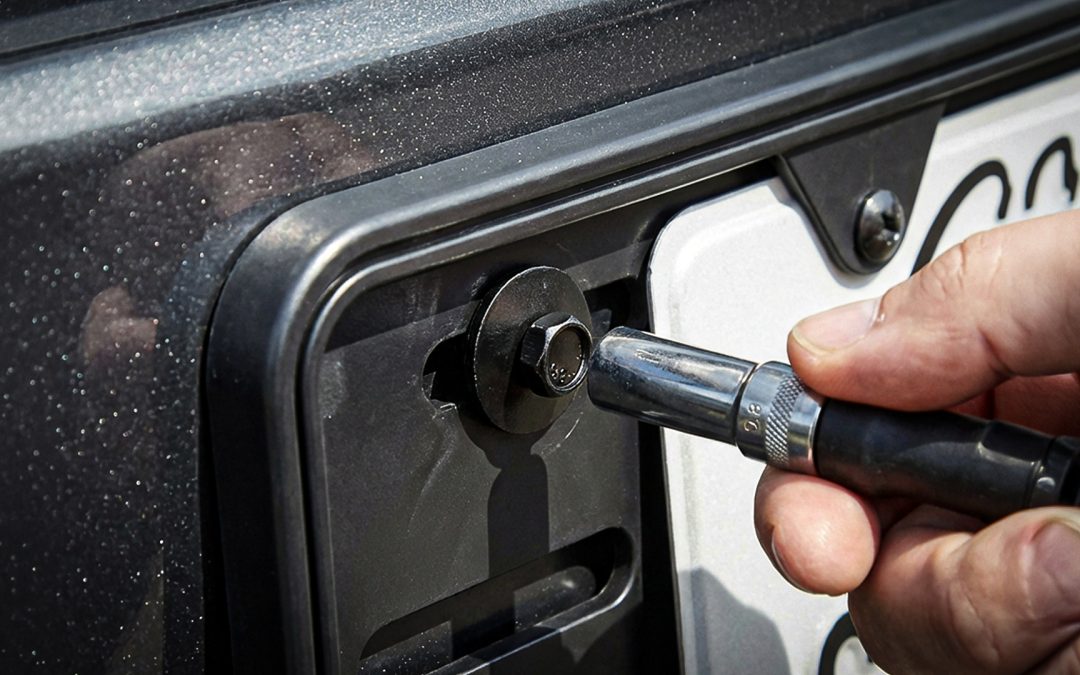
When it comes to threaded items, wrong is right. Or is it left?
To reach a successful diagnostic conclusion, you have to follow the right diagnostic path.
A bent dipstick and a broken oil cap are lucky indeed!
Participation in this forum is subject to Dorman’s Website Terms & Conditions. Please read our Comment Policy before commenting.