Maybe there’s a reason “upsell” has become a dirty word—and it might be your fault.

Service Writing Tip: Justify Your Recommendations
read more



Maybe there’s a reason “upsell” has become a dirty word—and it might be your fault.
Not so long ago, EVs and hybrids were a fringe portion of the automotive world driven by people willing to try something new. Manufacturers had to experiment with state-of-the-art technologies and designs to find out what worked for consumers. Some early hybrid and electric vehicles were runaway successes and some flopped; others were simply held back by the technologies of their time. Let’s look at some EV and hybrid vehicles that may have slipped under the radar and fallen into obscurity.
GM’s sub-brand Saturn was home to a few automotive experiments. One such test was a mild hybrid system that used an auxiliary electric motor, small battery pack, and a modified automatic transmission. The electric motor transmitted power to the engine via a heavy-duty belt. Whenever the vehicle began accelerating from a stop or needed extra power, the electric motor would assist. A 2.4L Ecotec engine powered the Vue Green Line and was an early application for start-stop engine technology. Thanks to the belt-driven hybrid system and start-stop feature, fuel economy improved 20% over the non-hybrid 2.2L four-cylinder Vue. Ultimately, the Vue Green Line was cut short by the shuttering of Saturn in 2010. While not a huge success, it was an important stepping stone in GM’s research into alternative drivelines.
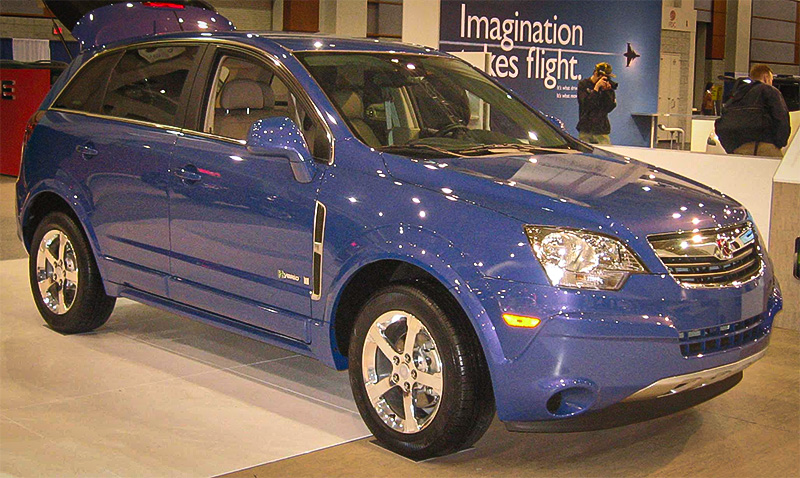
Saturn Vue photographed at the 2008 Washington DC Auto Show. Photo: IFCAR, Wikimedia Commons. Public Domain.
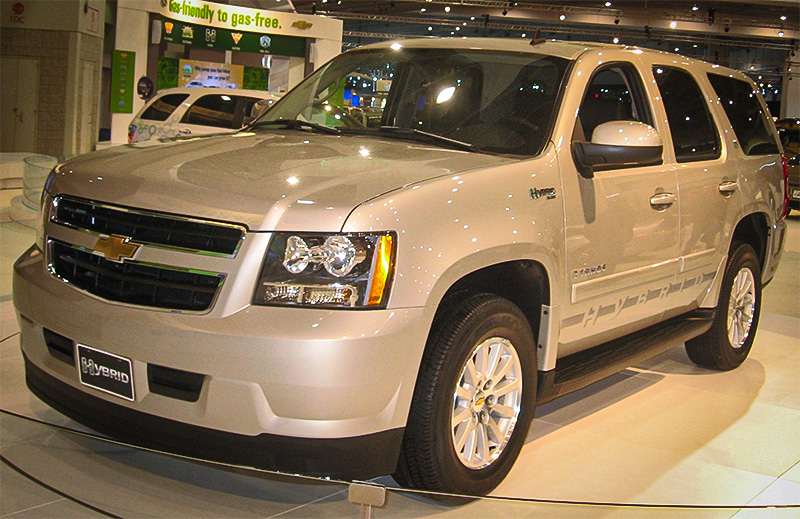
When a vehicle weighs over 5,000 pounds and gets 15 mpg around town, anything you can do to be more efficient is welcome. GM had the idea to put two electric motors inside the transmission itself. This allowed the Tahoe Hybrid to drive on pure electric power at low speeds, then switch over to the gasoline engine when needed. A large battery pack tucked under the middle row seats supplied power. The 6.0L V8 engine under the hood used cylinder deactivation to operate as a V4 when power demand was low. The result was 21 mpg in the city for 2WD models, a considerable improvement. Unfortunately, the system proved expensive and difficult to service. Today, parts for the special hybrid-motor transmission unit can be rare and costly.
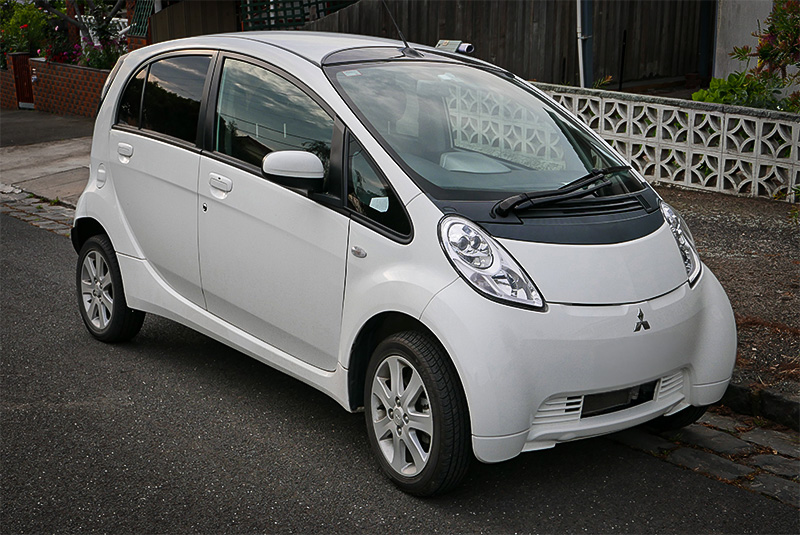
If you’ve ever wanted a golf cart with air conditioning that you can drive on the highway, then the Mitsubishi i-MiEV is for you! Available in the United States from 2011-2017, the i-MiEV was actually sold elsewhere in the world until 2021 under nameplates such as Peugeot and Citroen. Technically the i-MiEV was a Japanese Kei car, hence its diminutive size. Driving range was roughly 60 miles on a full charge with a top speed of 80 mph. Its futuristic design attracted those looking to make a statement as early adopters of electric driving technology. The small size and narrow width made it a great city car, but total sales barely broke 2,000 units. Spotting an i-MiEV in the wild is rare today.
For a brief moment before Y2K, Chevrolet offered a fully electric compact pickup. This was no slap-dash electric conversion though. The electric S-10 was more akin to a GM EV1 with a truck bed. It had a similar front wheel drive setup to the EV1, but the massive battery pack was wedged under the bed between the frame rails. Driving range for early models was roughly 45-60 miles depending on how it was driven and loaded. The truck itself was rather plain looking, which makes sense as it was pretty much only sold to large utility fleets. Only an “ELECTRIC” door sticker hinted at what lay underneath the sheetmetal. Less than 500 S-10 EVs were built, with most meeting their fate at the crusher. Only a handful escaped being scrapped. It would be another 25 years before Chevrolet offered another fully electric pickup truck with the Silverado EV.
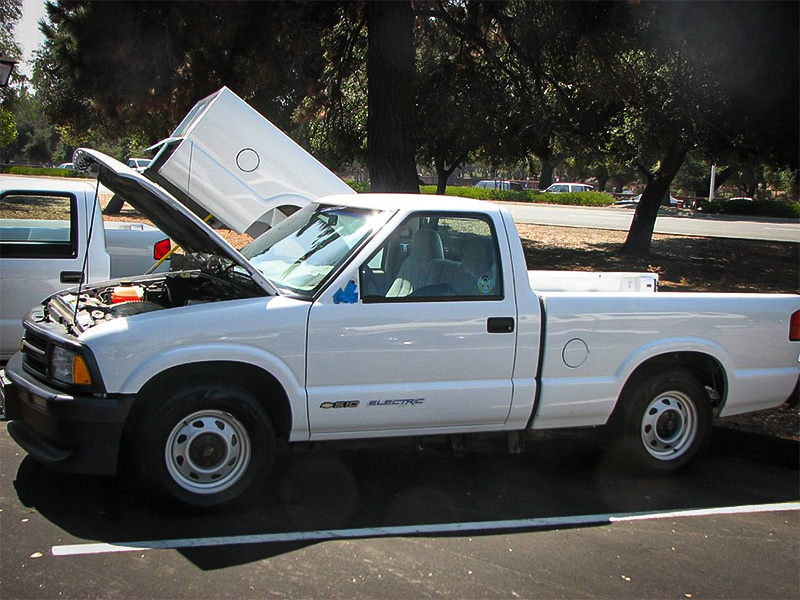
1997-98 Chevrolet S-10 EV. Photo: Mike Weston, via flickr.com.
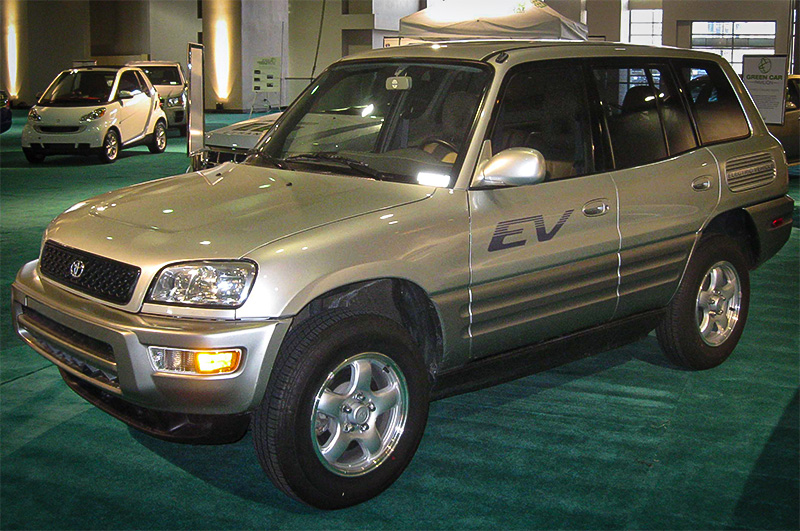
If you’ve never seen a fully electric first-gen RAV4, you aren’t alone. In order to meet local clean air laws, the RAV4 EV was mainly available in California. A front-mounted electric motor drove the front wheels, just like the normal base model gas RAV4. The battery pack was slung underneath the passenger cabin, leaving plenty of room for passengers and cargo. Driving range was roughly 95 miles with a top speed of 78 mph. There was no missing the alternative power message thanks to large “EV” letters adorning the front doors and rear cargo door. Only 1,500 units were available for lease in the United States, but many still roam the roads thanks to an enthusiastic owner base.
Most people remember the Cube, but did you know that Nissan offered an unusual hybrid trim in Japan to give their teeny hatchback better traction in slippery conditions? Nissan’s “e-4WD” system was essentially an electric motor that could spin the rear wheels when engaged, without any driveshaft or other mechanism connecting it to the gas engine driving the front wheels. So, with gas power in the front and electric power out back, the Cube e-4WD could technically be driven as a “hybrid” vehicle. Although the system added weight and complexity, it was a clever and cost-effective way for Nissan to add some versatility to their FWD cars. Nissan tried using e-4WD in a few other JDM models before replacing it with more sophisticated systems like e-4ORCE. Maybe e-4WD would have caught on if it was an option in the United States; an import older than 25 years is the only way to get one stateside at this point.
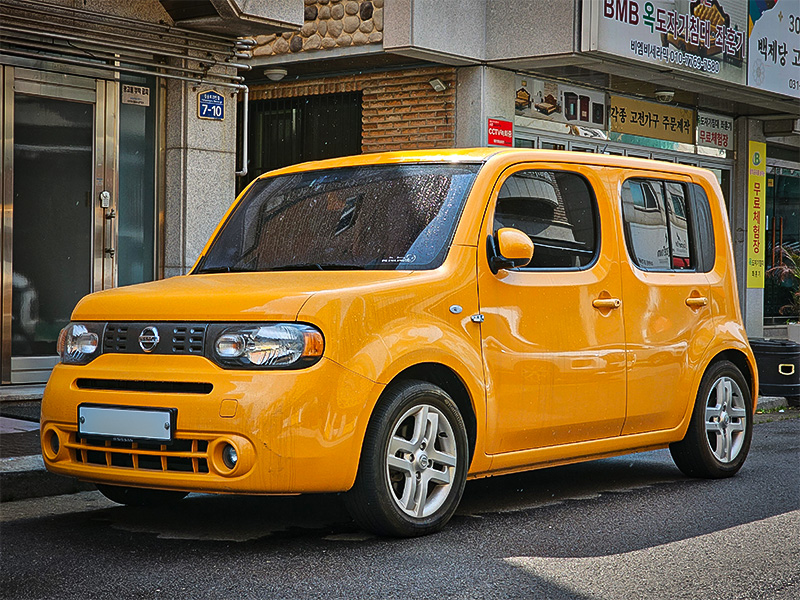
2002-2018 Nissan Cube e-4WD (JDM). Photo: Damian B Oh – Own work, CC BY-SA 4.0.
Vehicles like these may be forgotten, but that’s not to say they’re unloved; certain hybrids and EVs from the past have developed an almost cult-like following. One S-10 EV fan managed to collect three of them and is avidly working to make them all roadworthy again.
As one would expect, parts for any of these forgotten vehicles can be hard to source if things go wrong. But if you want a rare vehicle that will have people asking questions in the parking lot, one of these unicorns may be your ticket.
The articles and other content contained on this site may contain links to third party websites. By clicking them, you consent to Dorman’s Website Use Agreement.
It’s not just you. This job ain’t what it used to be.
As General Motors’ first design chief, Harley Earl transformed the automobile from a machine into a cultural icon.

Aging roads and infrastructure might play a role in planning your shop’s future business.
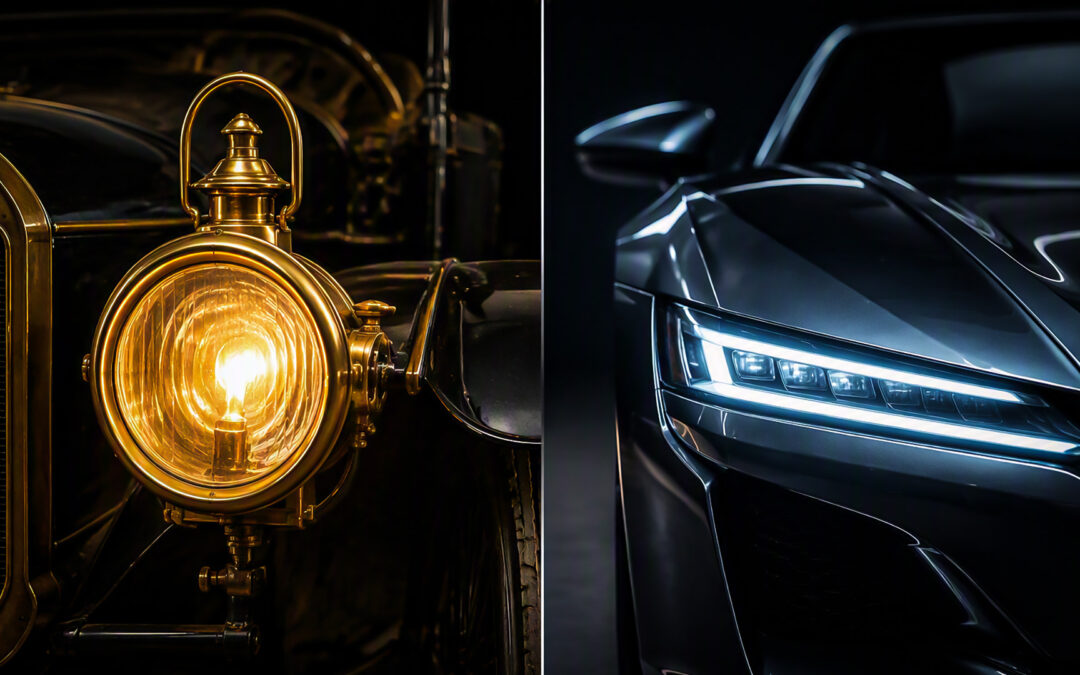
You may not think it, but automotive lighting has come a long way.
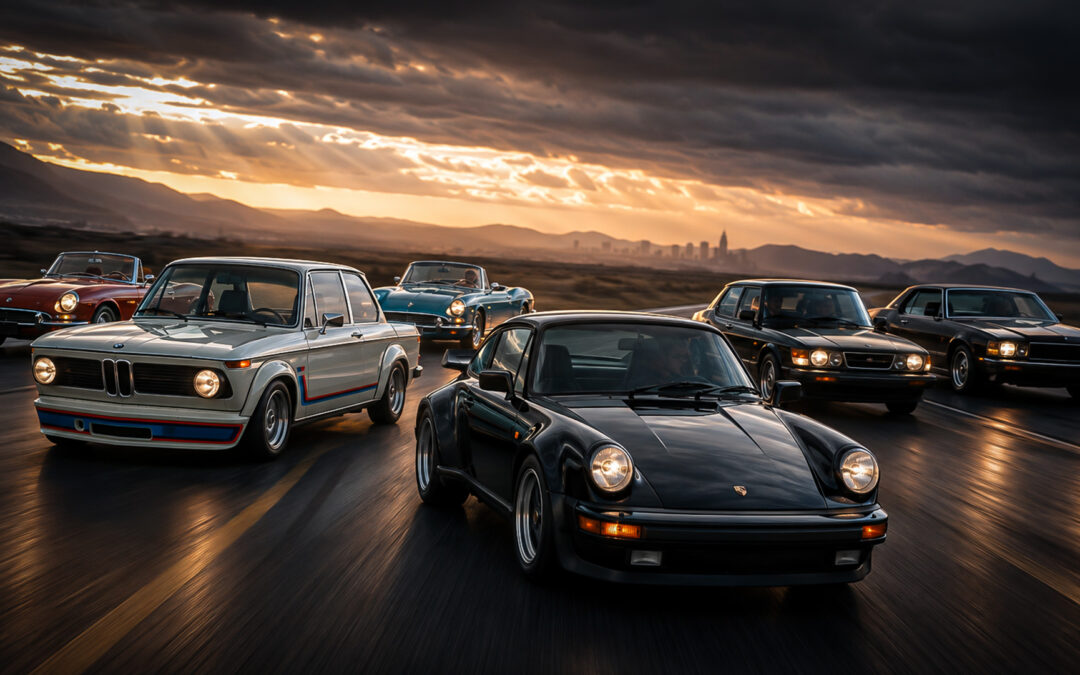
Here are eight cars that paved the way for modern engines.
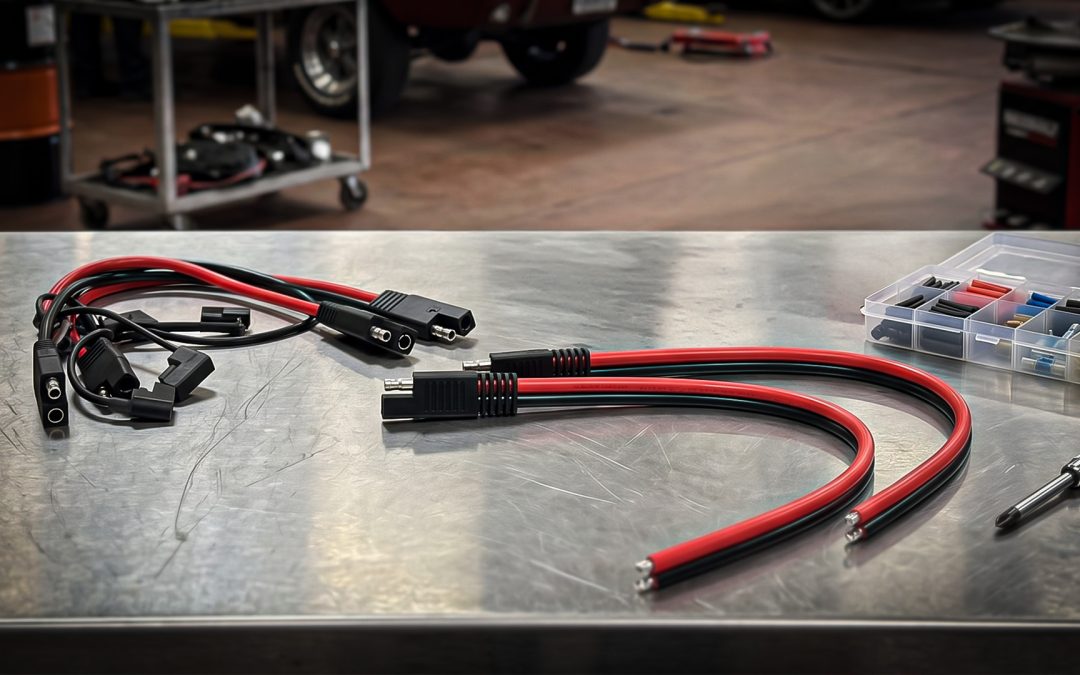
Ostensibly simplistic for casual users, the SAE plug is often an accident waiting to happen.
Participation in this forum is subject to Dorman’s Website Terms & Conditions. Please read our Comment Policy before commenting.