Maybe there’s a reason “upsell” has become a dirty word—and it might be your fault.

Service Writing Tip: Justify Your Recommendations
read more



Maybe there’s a reason “upsell” has become a dirty word—and it might be your fault.
Every piece of a car’s puzzle shapes its identity: exterior design, performance, power, technology, or the badge on the hood. What’s easy to overlook is how these components have evolved over time. Every part of a vehicle has its own history of innovation, all the way back to the very first automobiles.
Most of us take headlights for granted without realizing how far they’ve truly advanced. From candle-lit lanterns to LED lights that can instantly adapt to the weather, headlights have been paving the way for safe driving for well over a century.
Before we can really explore the way that car headlights reached their modern form, let’s go back to a time before cars were even in the picture: the years of horse-drawn carriages. In the late 1600s, carriages became increasingly common for personal and commercial travel and rose in popularity throughout the 1800s and into the early 1900s.
Of course, these carriages still needed to have visibility at night, which was accomplished with lanterns mounted on the carriages themselves. These were sort of the headlights before headlights, providing light for nighttime travel and increasing visibility to others on the road. They typically featured a protected flame, and some designs even included a ventilation system to help the flames burn more consistently. They were far from perfect, and visibility was about as dismal as you’d expect, but they sure were better than nothing.
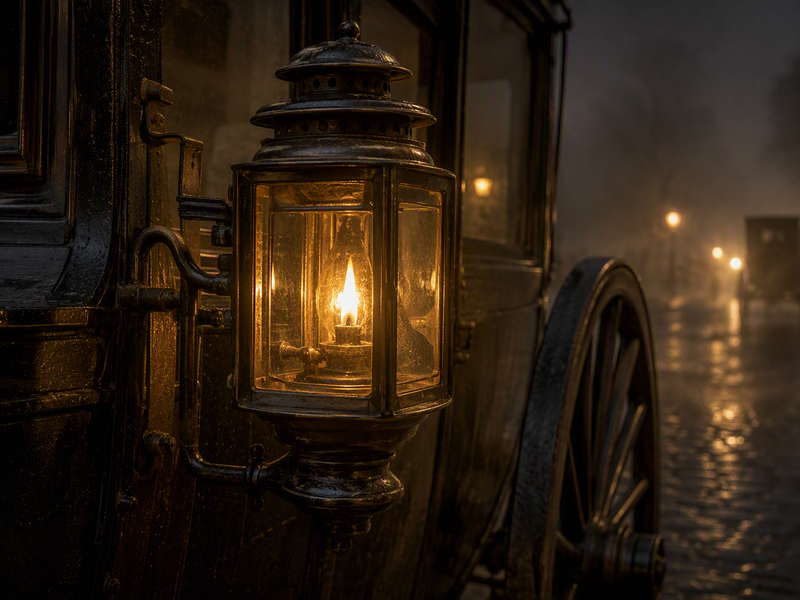
Carriage-mounted lanterns provided basic nighttime visibility long before automobiles reached the road. Photo: Generated with Microsoft Copilot.
First appearing in the late 1890s, the next major development in the world of headlights was the acetylene lamp. The system was simple; acetylene gas would be produced through a chemical reaction of water and calcium carbide, which would create a bright white flame when burned. It’s the same basic gas found in one of the tanks on your oxyacetylene torch today.
Acetylene lamps need three basic parts to function. First, there’s the generator chamber where the gas forms. From there, it travels to a burner jet for ignition. Finally, a parabolic reflector focuses the flame’s light forward.
The lamps quickly became the standard automotive lighting system by 1900, lasting until around 1915. When compared to the previous carriage lanterns, they were brighter, less affected by weather like wind or rain, and overall, more suitable for moving vehicles.
However, with all the improvements over the lanterns, they still weren’t close to being perfect. These lights could pose a serious safety hazard due to open flames and highly flammable gas leaks. And, if the reaction wasn’t working properly, the gas wouldn’t produce a strong flame to create enough light on the road. This also led to limited light output, especially when compared to future developments. It wasn’t long before headlights were revolutionized by electric power.
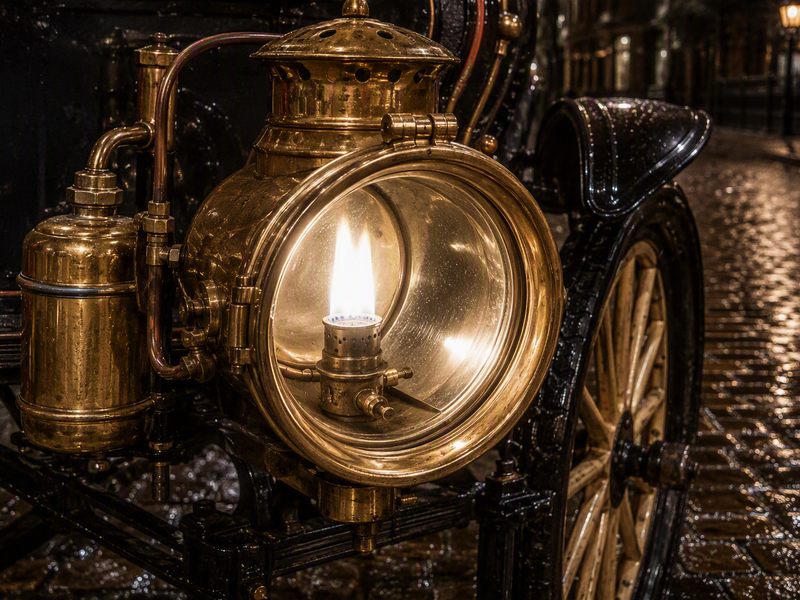
As acetylene headlamps were hitting their stride, the first examples of electric headlights were also being developed. The Electric Vehicle Company experimented with them on their “Columbia Electric Car”, although Peerless would be the very first marque to fully adopt electric headlights in 1904.
These headlights worked as you’d expect: power from the car’s electrical system heated a filament inside a glass bulb. It wasn’t until 1912 that electric headlights went mainstream, when Cadillac introduced a breakthrough electrical system with Delco ignition. This was considered one of the first “true” modern automotive electrical lighting systems.
It also led to several safety improvements. For example, 1915 saw the introduction of the low-beam headlights, which helped reduce glare for others on the road. Cadillac offered up another safety improvement in 1917 with a system that allowed beams to be adjusted from inside the vehicle, rather than manually. Stronger, more consistent light output, safer operation, and reduced maintenance catapulted electric lighting to the dominant choice in just a few years.
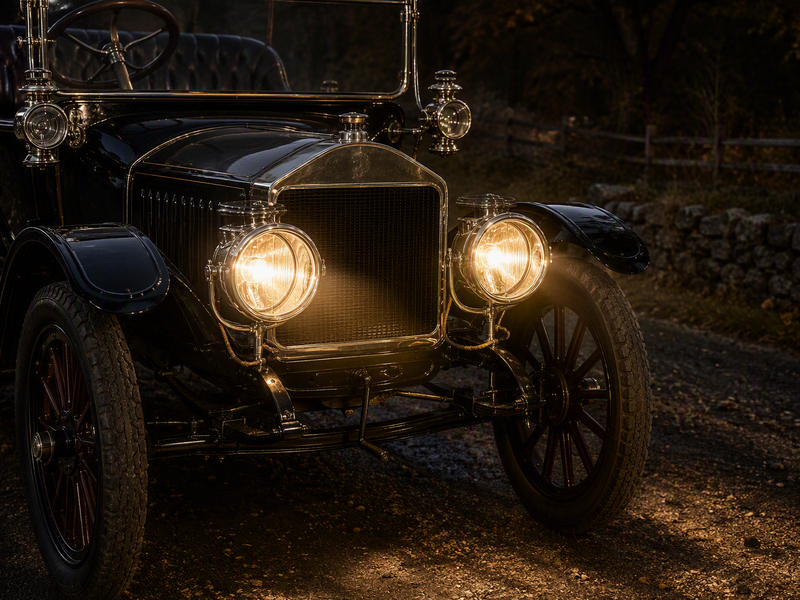
Introduced in 1939, sealed-beam headlights were the next big innovation and quickly became the new standard in automotive lighting. Building on the filament-and-bulb concept, sealed beam headlights had integrated reflectors secured to the lens for improved durability and resistance to the elements. Their advantages were so considerable that United States federal regulations mandated their use on new vehicles starting in 1940. Easier to replace, less expensive to maintain, and more reliable than their predecessors, sealed beam headlights soon filled roadways around the world.
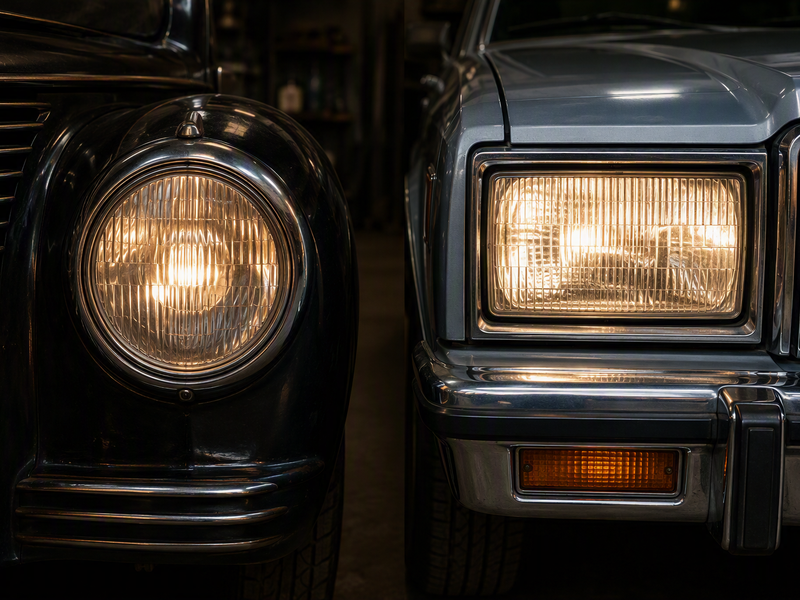
First introduced in the late 1950s in Europe, halogen headlights used a tungsten filament inside a glass bulb that was filled with halogen gas. In use, the halogen gas helped recycle evaporated tungsten back onto the filament, which improved the headlights efficiency and lifespan. But the U.S. would lag behind Europe in adopting these new lights because of the old sealed beam regulations still in place. It wasn’t until the 1970s that new legislation allowed halogen lights, and this design stuck around for decades due to its affordability, efficiency, and illumination power. Drawbacks included dimming with age and glare issues when improperly adjusted, which are still problems that today’s techs might need to diagnose on vehicles like economy cars, utility vehicles, and vintage machines.
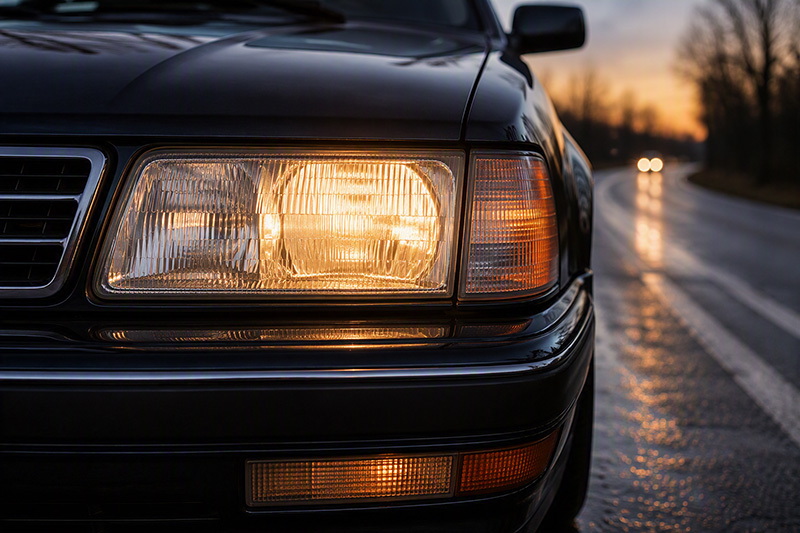
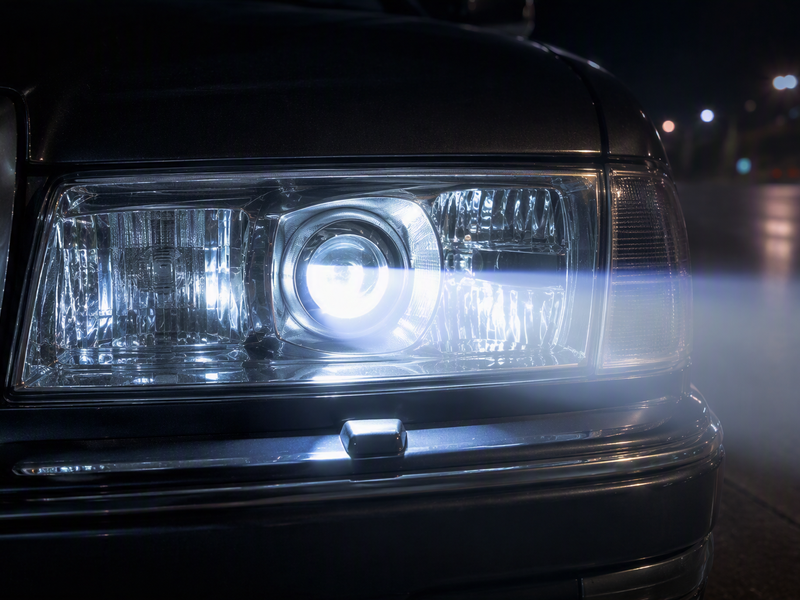
When BMW rolled out its flagship 7 series sedan in 1992, one of its headline features was High-Intensity Discharge (HID) headlights. Also referred to as xenon headlights, these were initially only accessible on higher-end or luxury cars.
Rather than using a filament, these headlights used an electric arc (a continuous flow of electricity through gas) held between two electrodes inside a gas-filled bulb. The arc adds energy to xenon gas and various metal salts, producing a very bright white light that instantly stood out from the more yellowed hue of halogens.
Brighter and longer lasting than previous technologies, HIDs increased in popularity and made their way to more attainable cars besides just the luxury segment. Replacement and maintenance costs were higher due to their complexity, but this was balanced by a general increase in reliability over filament systems.
The next breakthrough marks the beginning of the modern era: light emitting diodes (LEDs). They first appeared on mass market production cars in the mid-2000s as a more modern type of lighting. Gone were the filaments and gases of the past. Instead, electron movement in a semiconductor generated the light output. Auto manufacturers had used LEDs for other types of vehicle illumination previously, but it wasn’t until the 21st century that they were for primary forward lighting.
The big advantage? Electronic control. LEDs could be precisely tuned for brightness as well as adaptive functions. Plus, they were highly efficient, very reliable, and adaptable, giving automotive designers new options for styling and safety.
Lexus led the charge with the 2006 LS 600h, which was among the first vehicles with LED low beams from the factory. Then in 2007, Audi took LEDs a step further with a full LED lighting system for the R8.
LED headlights came with lots of pros: stellar light output, increased efficiency, and a longer expected headlight lifespan with high durability. The main drawback, as with HIDs, was cost, as they are expensive to manufacture (and repair once they fail).
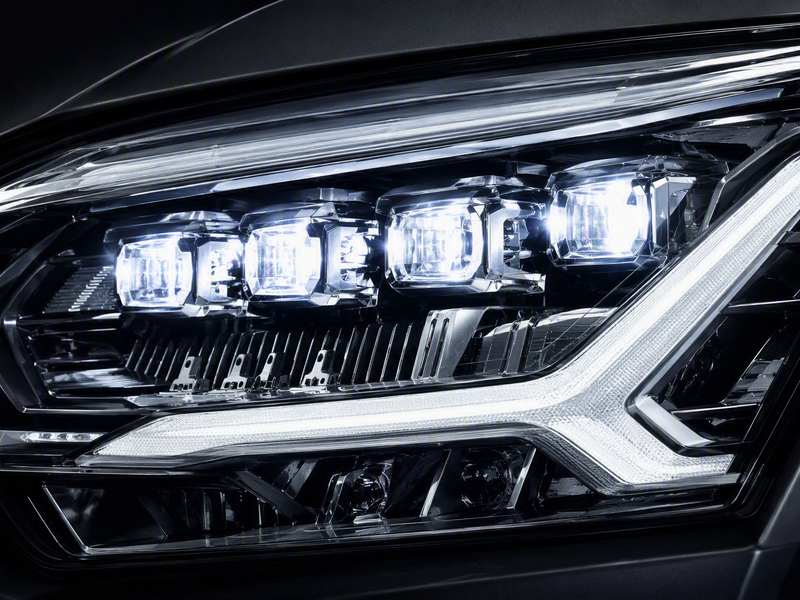
How do you build on the success of LEDs? How about more LEDs? Rather than using one continuous beam of light, matrix LED system use multiple individually controlled LED segments.
The segments work in tandem with sensors and cameras that scan the road and detect different objects, such as oncoming vehicles or pedestrians. A control unit processes this data and adjusts the lighting pattern by dimming or turning off specific headlight segments, optimizing lighting for every part of the driver’s view instead of relying on a single output setting for the entire road ahead.
Like the earlier LED headlights, matrix-style adaptive systems first appeared on luxury cars. The earliest examples debuted in the early 2010s, and less than a decade later, they’d spread to everyday cars, trucks, and SUVs.
Matrix LED systems deliver a balance of performance and practicality, merging the benefits from LED headlights with added advantages like improved visibility with less glare, automatic switching between low and high beams, and real-time adaptations to driving conditions.
The downsides of LEDs are carried over too, like high costs of repair and manufacture. The added complexity of the sensor and camera arrays introduces some other weaknesses, too, since they can be tripped up by fog, rain, or dirt.
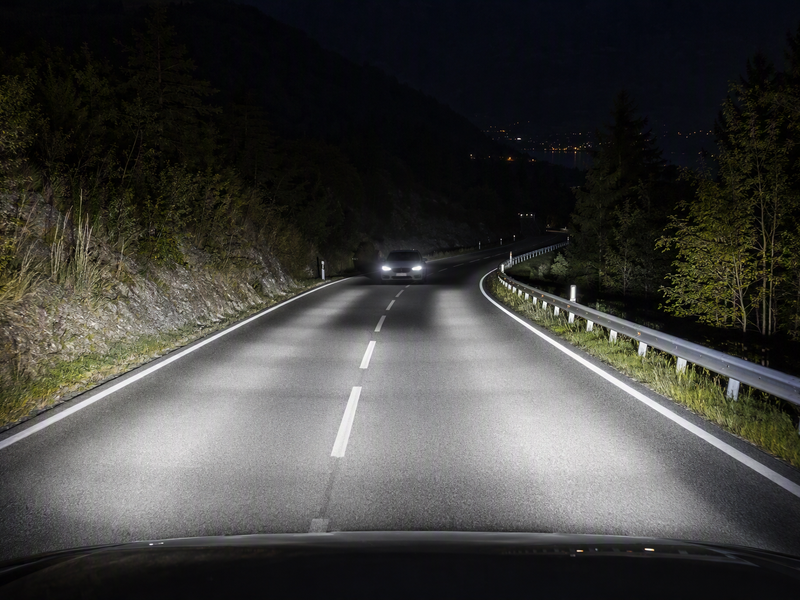
The next major development, laser headlights, takes a whole new approach to LEDs. Laser headlight diodes generate a highly concentrated beam, which is then converted into safe white light that can be focused out the front of the vehicle. These headlights are extremely bright and offer long-range illumination.
BMW was once again first to market with this new headlight design, first seen as a concept in 2011. By 2014, the tech was released to the public via the BMW i8, the first-ever production car with laser headlights. Audi wasn’t far behind, dropping their first lasers with the R8 LMX.
Although they outperform any of the headlights before, at least on paper, they’re not perfect. Laser headlights are exceptionally expensive, and they also face regulatory restrictions, as the brightness is limited in some regions (including the U.S.). Because of this, their popularity has declined since 2020. Were they ahead of their time, or simply a step too far?
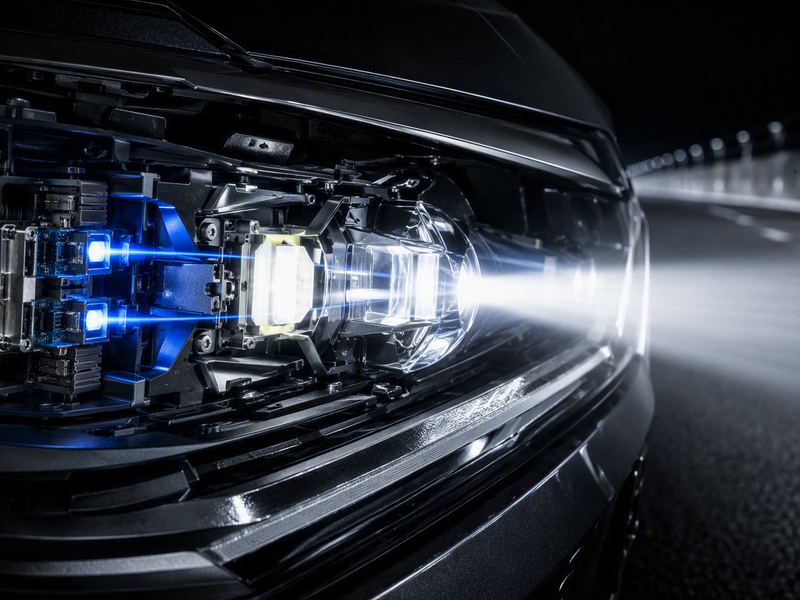
While laser designs didn’t quite catch on, smart headlights might end up being the future of LED headlights. Like matrix setups, smart LED systems use cameras, sensors, and software to actively analyze the environment around the car and adjust the lighting in real time while communicating all this information back to the driver.
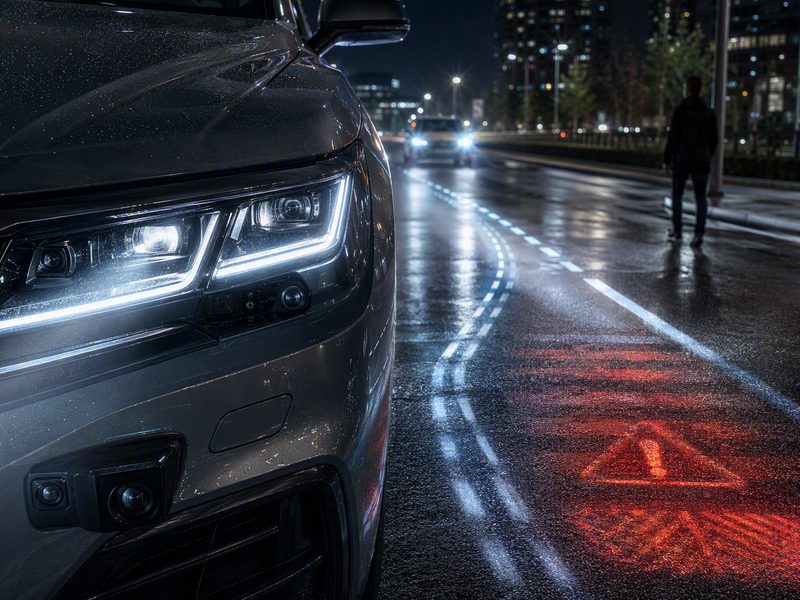
They can detect cars, pedestrians, road conditions, lane markings, and even weather conditions. The key difference is the smart headlights can project information, such as warning symbols, hazard alerts, or even navigation arrows.
These systems were first introduced with the 2018 Mercedes Benz Digital Light projection-based headlight systems. They might be the best look yet at the future of automotive lighting, as they offer the most visibility, precise control, enhanced safety with real-time adaptations, and driver assistance software.
As it stands today, one of the biggest drawbacks to smart headlights is that they remain largely limited to higher-end vehicles. But if the history of automotive lighting has taught us anything, it’s that today’s luxury features often become tomorrow’s everyday standards. From candle-lit carriage lanterns and acetylene flames to adaptive LEDs that can react to traffic, weather, and road conditions in real time, each generation of headlights has pushed visibility, safety, and technology forward. As automotive technology continues to evolve, headlights will remain a perfect example of how even the most familiar vehicle components can undergo extraordinary transformation.
The articles and other content contained on this site may contain links to third party websites. By clicking them, you consent to Dorman’s Website Use Agreement.
NC House Bill 926 introduces long-term protections for racetracks, shaping the future of motorsports and influencing the broader automotive landscape.
EVs and hybrids that time forgot.
It’s not just you. This job ain’t what it used to be.
As General Motors’ first design chief, Harley Earl transformed the automobile from a machine into a cultural icon.

Aging roads and infrastructure might play a role in planning your shop’s future business.
Here are eight cars that paved the way for modern engines.
Participation in this forum is subject to Dorman’s Website Terms & Conditions. Please read our Comment Policy before commenting.