Do you favor margin or revenue?
Is an Appointment-Only Shop Schedule Wise or Madness?
read more



Do you favor margin or revenue?
Japanese Domestic Market (JDM) cars during their heyday in the 1990s were the unattainable treasure, not for North American consumption, only accessible in video games. They were tantalizingly close but not truly attainable. Turns out all it takes is patience: 25 years’ worth.
Instituted in 1988, the Imported Vehicle Safety Compliance Act opened the door for the importation of JDM and other “gray market” vehicles. The act states that any vehicle that is 25 years old or older is exempt from the stringent Federal Motor Vehicle Safety Standards that apply to newer cars. This rule was designed to allow historically significant or collector vehicles into the country without forcing costly modifications to meet modern safety and emissions regulations.
That 25-year countdown is based on the actual month and year of manufacture, not the model year, meaning many vehicles built in 2001 will become legal to import as they hit their 25th birthday in 2026.
As 2001 cars reach eligibility month by month, there are some fresh faces ready to make the swim across the Pacific. Here are some of the more interesting prospects that may pique the interest of JDM enthusiasts and collectors.
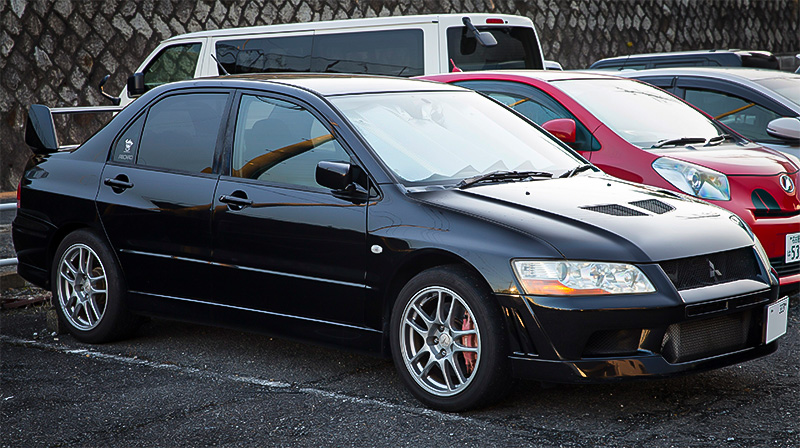
Mitsubishi Lancer Evolution VI. Photo: Mr.choppers, CC BY-SA 3.0, via Wikimedia Commons.
The Mitsubishi Lancer Evolution VII marked a major step forward for the Evo lineage. Powered by the legendary 2.0-liter turbocharged 4G63 inline-four, it was rated at Japan’s then-gentleman’s-agreement limit of 280 horsepower. The all-wheel-drive Evo VII introduced advanced technology like Active Center Differential (ACD) and Super Active Yaw Control (S-AYC), giving it exceptional traction and cornering ability. With a 0–60 mph time in the sub-5-second range and rally-bred chassis tuning, it is brutally effective on both road and track.
From a driving standpoint, the Evo VII represents the sweet spot between raw mechanical feel and modern performance engineering. It’s heavier and more refined than earlier Evolutions, but still aggressively focused and analog compared to later generations. According to classic.com, typical market values for an Evo VII range from $15,000 to $38,000 with benchmark data suggesting an average around $21,000.
The Lancer Evolution VII benefits from a strong aftermarket and excellent engine and drivetrain support thanks to the proven 4G63 engine and a large enthusiast community in North America. Many mechanical parts are readily available, but OEM body and interior components may require importing, which could be as simple as hitting up eBay. A lot of performance-oriented shops are familiar with the powertrain as it was offered here in the Mitsubishi Eclipse/ Eagle Talon during the ‘90s as well as Evo VIII and Evo IX starting in 2003.
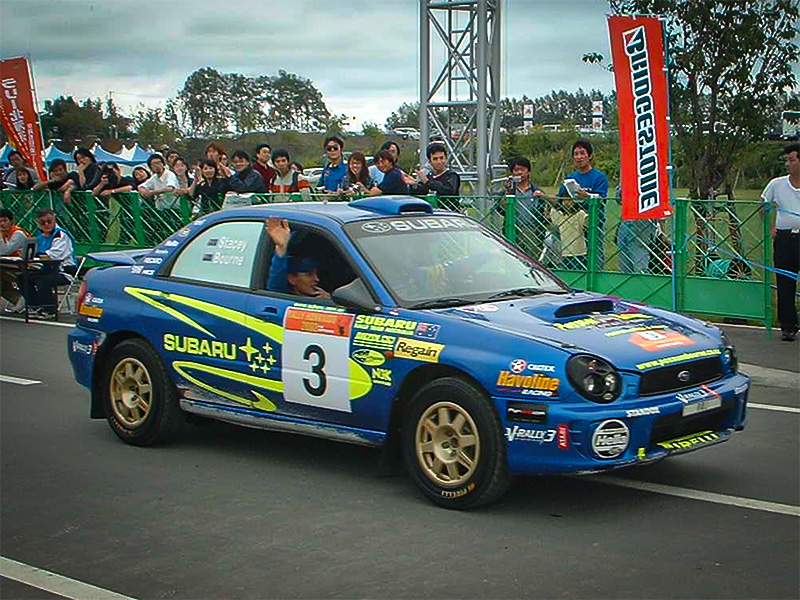
Subaru ImprezaWRX Sti. Photo: 100yen 05:18, 8 October 2006 (UTC), CC BY-SA 3.0, via Wikimedia Commons.
This is a nostalgia meets technology mash-up. Enthusiasts remember the Bugeye WRX … this is more than that. This is the STi version that you couldn’t get in North America.
Powered by a turbocharged EJ207 flat-four and paired with a manual transmission, the Bugeye STi delivers strong mid-range torque, quick spool up, and a mechanical, connected driving feel. Its Symmetrical All-Wheel-Drive system, aggressive suspension tuning, and Brembo braking hardware provide exceptional grip, very much in the same vein as the Evo VII.
Its distinctive headlight design, motorsport heritage, limited production numbers, and its position as the first GD-chassis STi make the 2001 edition one of the most recognizable and character-rich STi generations. Market values for a 2001 WRX STI on classic.com range from around $12,000 to $35,000.
This body style was offered in the U.S. at the time, so it’s very well supported from an auto body standpoint, with extensive aftermarket options and strong parts cross-compatibility with U.S. WRX models. The Subaru is easy to maintain in most areas of the U.S., as the driveline is the same as offered in other Subaru models, and WRX STis came to North America in 2004.
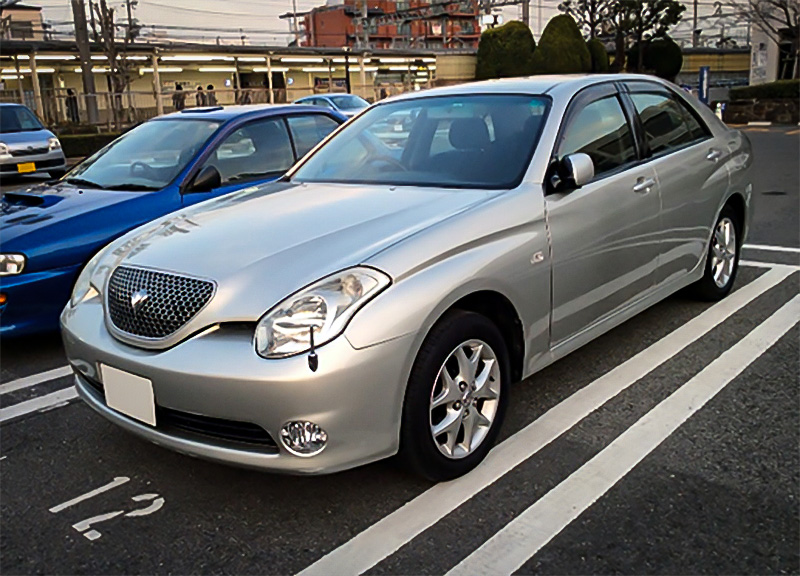
Toyota Verossa VR25. Photo: Tokumeigakarinoaoshima, CC0, via Wikimedia Commons.
Cars that shred tires to the cords for fun can be hard to characterize as an under-the-radar proposition … but this one is. The Toyota Verossa is built on the same rear-wheel-drive platform as the JZX110 Mark II which is itself a distinguished drift weapon. The Verossa VR25 is the one to get. It shares one of Toyota’s most respected turbocharged engines: the 1JZ-GTE inline-six. Not to be confused with the Supra 2JZ unit, the 1JZ still delivers smooth, linear boost and strong mid-range torque. With balanced chassis dynamics, a long wheelbase, and available manual transmission, the Verossa’s mechanical compatibility with other JZ-platform vehicles also makes it a popular foundation for performance upgrades. Classic.com tabs prices at a budget-friendly $3,000 to $8,000 for older, higher-mileage examples and $10,000 to $15,000 for a clean, low-mile, and more desirable VR25-trim example.
Because the Verossa was a bit overlooked back in the day due to its peculiar, unconventional styling, it has a bit of a popularity problem when it comes to parts. Verossa-specific body panels, lighting, and interior trim are niche and a challenge to find. However, there is fair mechanical support for the 1JZ-GTE engine, but it was never offered in North America.
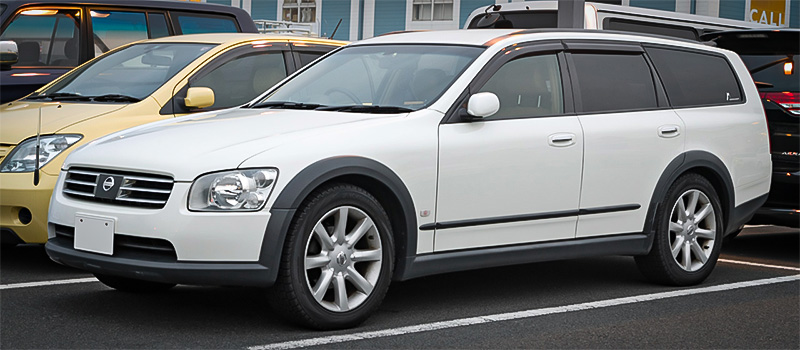
Nissan Stagea M35. Source: Tennen-Gas, CC BY-SA 3.0, via Wikimedia Commons.
Buzz Kill Disclaimer: This era of Stagea represents the exit of the Skyline RB26DETT powertrains, including the GT-R RB26DETT-powered Autech 260RS and AWD R34 Skyline GT-R. As of 2001 the sporty wagon was based on the 350Z and V35 Skyline via Nissan’s FM platform and its VQ engine family.
However, there are two especially interesting variants; the Stagea 350RX and 350S. Both utilize the Z-car’s 3.5-liter VQ35DE V6 engine. These models feature Nissan’s ATTESA E-TS all-wheel-drive system (like the R35 GT-R), optional rear-wheel steering, and five-speed automatic or six-speed manual transmissions. Values are modest with lower-end models priced as low as $3,000 to $5,000, while higher-spec or cleaner examples fetch $8,000 to $10,000.
Moderate-to-good serviceability here, especially for models sharing components with the U.S.-based 350Z or G35 platforms. Engine and common wear items are accessible, but wagon- and AWD-specific parts may require JDM sourcing.
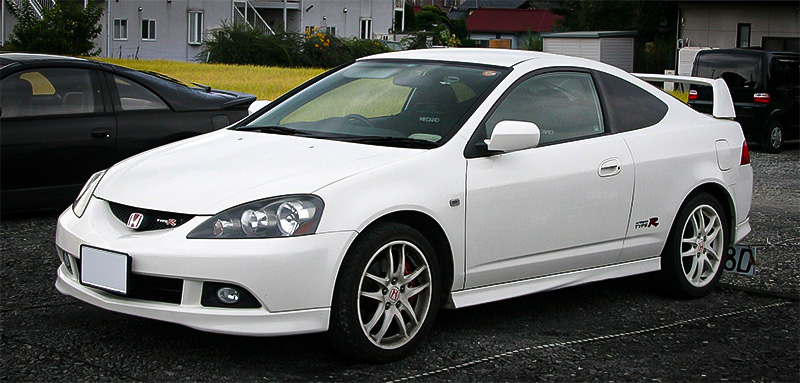
Honda Integra Type R DC5. Source: TTTNIS, Public domain, via Wikimedia Commons.
The DC5 is the second and final generation of the Integra Type R. As it stepped into the spotlight in Japan, the Integra badge was fading into the sunset in North America, being replaced by the decidedly less tossable RSX for the 2001 model year.
The Integra Type R is front-wheel-drive sport coupe featuring a 217-horse, 2.0-liter K20A i-VTEC engine, a smooth six-speed transmission, and a limited-slip differential. It is prized for its high-revving engine that pulls willingly past 8,000 rpm, precise handling, JDM-only exterior styling, and factory Recaro seats in the interior. Well-kept DC5 Type Rs often trade hands in the $15,000 to $30,000 range, with pristine examples reaching higher.
Excellent mechanical support due to the K-series engine’s popularity in the U.S. The Integra benefits from a strong aftermarket, abundant performance parts, and widespread tuning knowledge. Type R-specific body and interior pieces may require import sourcing.
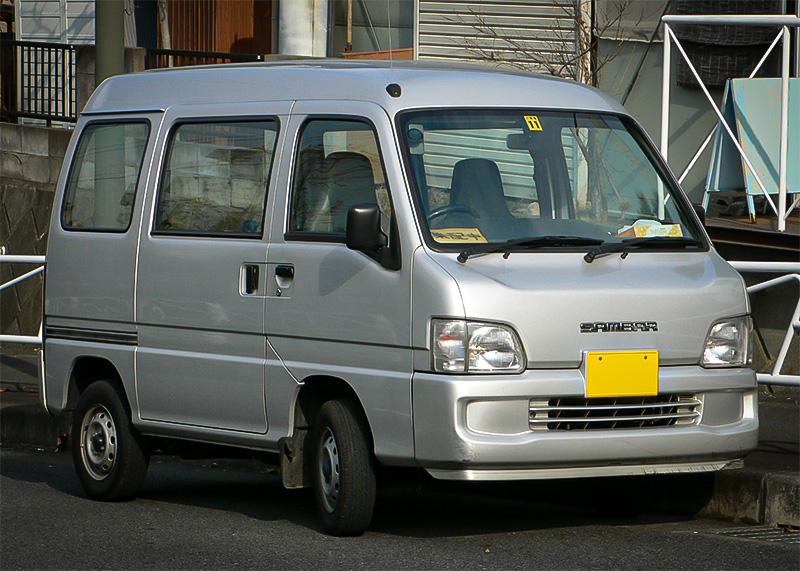
Subaru Sambar. Source: Mytho88, CC BY-SA 3.0, via Wikimedia Commons.
A Kei truck is a small Japanese pickup built to meet Japan’s “Kei car” regulations, which limit engine size to 660cc, power to around 63 horsepower, and overall vehicle dimensions with length maxing out at about 11 feet. The Kei class was created for the masses as the vehicles use less fuel, cost less to buy, and are easier to park and maneuver in dense cities. For added encouragement the government granted owners benefits like lower taxes, cheaper insurance, and, in some areas, exemption from strict parking space requirements.
The sixth generation of the Subaru Sambar came out in 1999 but we’re focusing on the 2001 version here because it’s the first with multi-port fuel injection. The sixth generation is known as the model that transitioned from carburetors to single-point fuel injection. Despite their similar silhouettes, not all Kei trucks are the same. Many prefer the Sambar because of its rear-engine design and use of a four-cylinder engine. The Honda Acty is also popular because of its mid-engine design. Engine placement is key when driving in snow or off-road because the front-engine design of the rest of the Kei truck offerings—Daihatsu Hijet, Suzuki Carryall, and Mitsubishi Minicab—tend to get stuck easier. Prices for a 4WD 2001 Sambar range from $8,000 to $12,000.
Kei trucks are mechanically simple in design, built as rugged farmhands or urban work trucks. Being such a popular niche, many parts are available on eBay, via Kei specialists like Oh Kei Garage, G & R Imports, and more. Some Kei dealers like NW Mini Trucks will source parts for those who buy their Kei vehicle from them. The Vancouver, Washington-based dealership also offers service and maintenance to local customers.
Many general repair shops are unfamiliar with the platform, and engine access, particularly on front- and mid-engine layouts, can be tight. The Subaru Sambar’s engine layout is generally somewhat easier to access than other Kei truck models.
The articles and other content contained on this site may contain links to third party websites. By clicking them, you consent to Dorman’s Website Use Agreement.
Tracking Pininfarina’s career from the beginning to 1987.

Aging roads and infrastructure might play a role in planning your shop’s future business.
You may not think it, but automotive lighting has come a long way.
Here are eight cars that paved the way for modern engines.
Ostensibly simplistic for casual users, the SAE plug is often an accident waiting to happen.
If it ain’t broke, don’t try to fix it.
Participation in this forum is subject to Dorman’s Website Terms & Conditions. Please read our Comment Policy before commenting.