Maybe there’s a reason “upsell” has become a dirty word—and it might be your fault.

Service Writing Tip: Justify Your Recommendations
read more



Maybe there’s a reason “upsell” has become a dirty word—and it might be your fault.
Paying the mortgage (or the rent) on the bricks—the actual shop itself—is an expense. (A fixed cost, if you want to be particular.)
But that building does more than keep your tools and techs dry. It provides room to work and house equipment. And if you’re like most shops, not every square inch is spoken for. If you have overhead storage, an outbuilding, or even enough flat land to drop a storage container, you have a way to make your bricks (and your asphalt, gravel, or dirt) work harder for you.
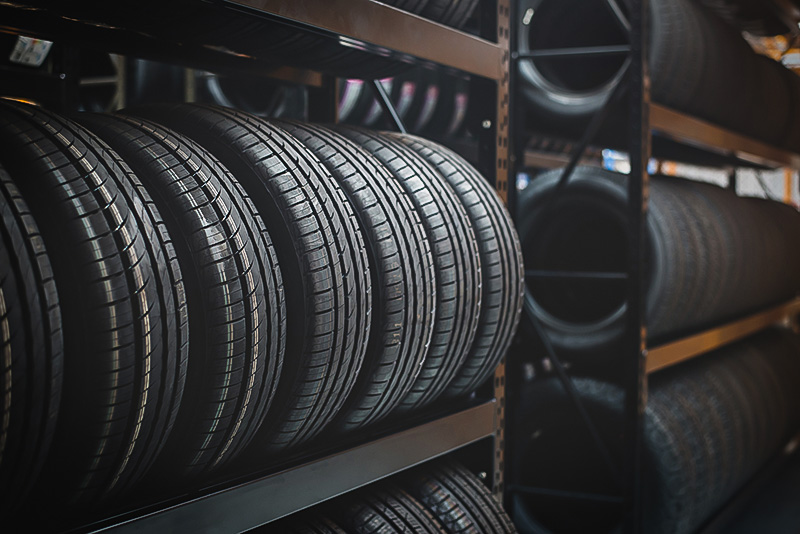
Tires are placed on the tire storage rack. Photo: istock.com/Chonlatee Sangsawang.
You can store items for customers who don’t have shops. No, you won’t compete with the local storage facility. And no, you don’t want customers to show up with hand-me-down infant clothes that might be pressed back into service. But your customers know you for the service you perform on their vehicles. Why not store their spare tires?
Think about it: it’s perfect on so many fronts. First, they’re already thinking of you when it comes to wheels and tires. They know you take care of them! So, who needs this storage?
If your shop is performance-oriented (probably not that likely) or performance-adjacent (probably more likely), there is the potential to store track tires, dragstrip wheels, and warmers. There are also mud tires and wheels for the off-road crowd, and if you have collectors or enthusiasts in your midst, careful storage of OE or rare aftermarket wheels is desirable. This might not be your shop, and that’s reasonable. But we’ve buried the lede here: The heavy hitters needing storage (sorry, Florida!) are customers with snow tires and wheelsets. If you live in the north, some of your customers will have snow tires. Summer tires and wheels need to be tucked away for the winter, and once the snow stops falling, those Blizzaks also need to be shelved
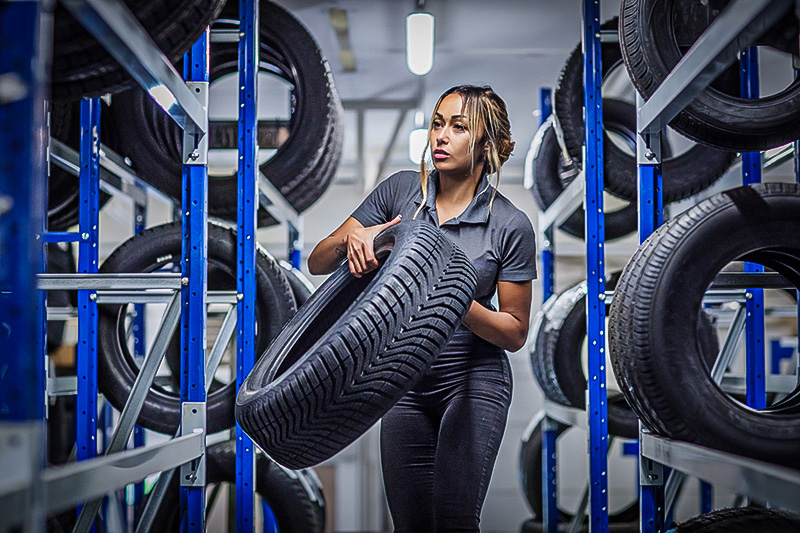
Tire storage within a shop. Photo: istock.com/Lorado.
And guess what—you have a leg up on the storage facility. Why? Because you service the vehicle! Especially for a vehicle without a bed, owners generally aren’t looking to transport tires four times a year. (Winter ones on, summer ones off, summer ones on, winter ones off). Tires and wheels are dirty. They ruin interiors. And clothes. And they’re heavy. Wouldn’t it be convenient for them if they could just leave them at your shop?
And now you can monitor the tires for the customer. A simple tagging system allows you to put the tires in the right spots for even wear when they go on the car, and honestly, what customer wants to try to keep track of that?
Charge a modest storage fee; it’s cash in the till and almost purely profit (unless you have to pay off the sea container you order to throw on the back forty). You can ask for a little more money if you bundle storage in with something like free swaps on and off the car or rebalancing every time a set gets stored; that’s great work for a lube tech on a slow Saturday morning.
Or go the other way: offer free storage to customers who buy a set of summer or winter buns from you.
But before you write off that modest income (or non-existent income, depending on how you structure your storage scheme), think about all the downstream sales that can come from this program. You now have a reason to cold-call customers twice a year. And they’re the best type of customer! You already know that they spend on their cars—and even more so than an average motorist. If your techs are worth their salt, finding additional needs on a vehicle on the rack for a seasonal tire swap should be no sweat at all.
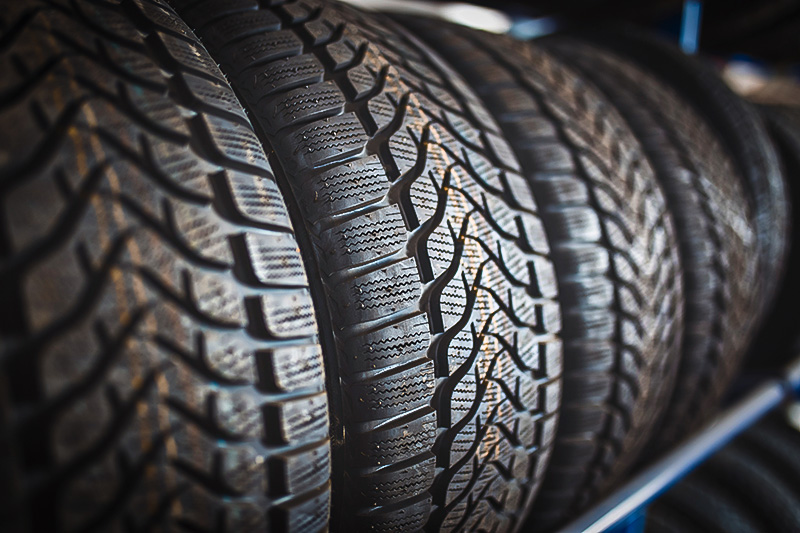
Tires on a rack. Photo: istock.com/cihatatceken.
Who do you think gets the sale when those summer Potenzas or winter Trelleborgs are shot? It’s you. And those are both specialty, higher-than-normal margin tires. Tuner lug nuts? The second set of pressure sensors (and the labor to program them)? And if you have a customer who doesn’t want to sink the money into a spare set of wheels and just has you mount and balance the tires at each swap? That’s easy money.
And it’s also your work; that’s all but guaranteed. Even the meekest service writer in the land couldn’t lose those sales! The rotations that follow are yours. And rotations go hand-in-hand with regular oil changes and all the related items on the service schedule.
Tire storage converts space and time into money. It generates sales with your most engaged customers who place value on automotive performance and reliability. Getting them to voluntarily tether themselves to you while taking up storage space that’s not producing income for your shop is a great first step in forming a symbiotic relationship that pays big dividends for both parties.
The articles and other content contained on this site may contain links to third party websites. By clicking them, you consent to Dorman’s Website Use Agreement.
Maybe there’s a reason “upsell” has become a dirty word—and it might be your fault.

Do you favor margin or revenue?
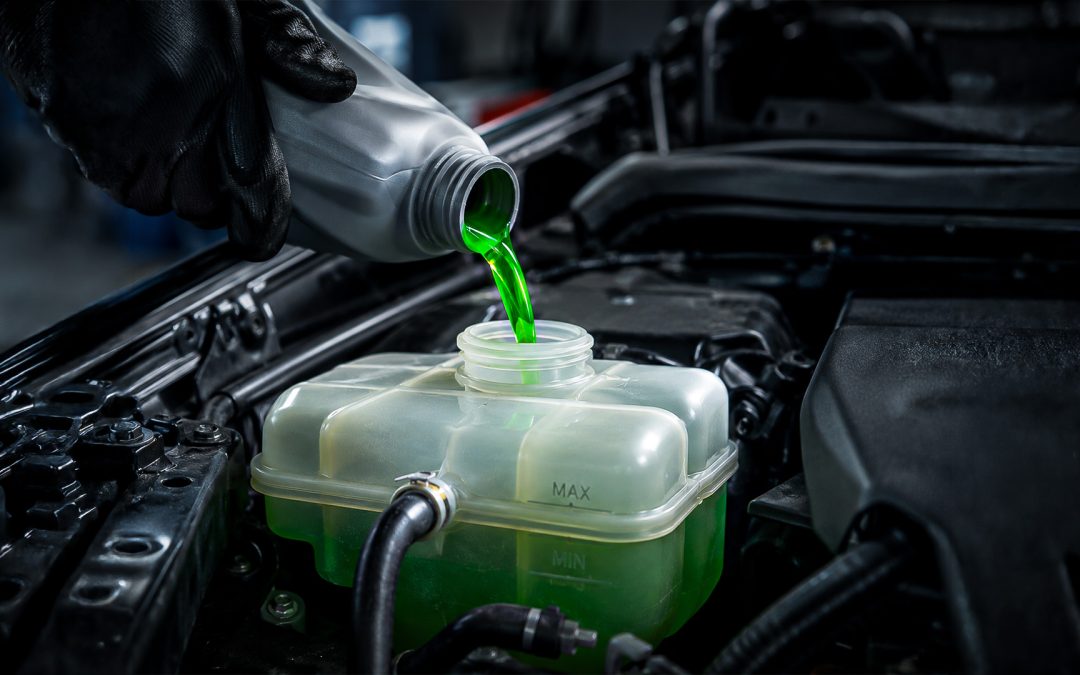
Customers don’t realize it needs attention. Sadly, many mechanics don’t, either.
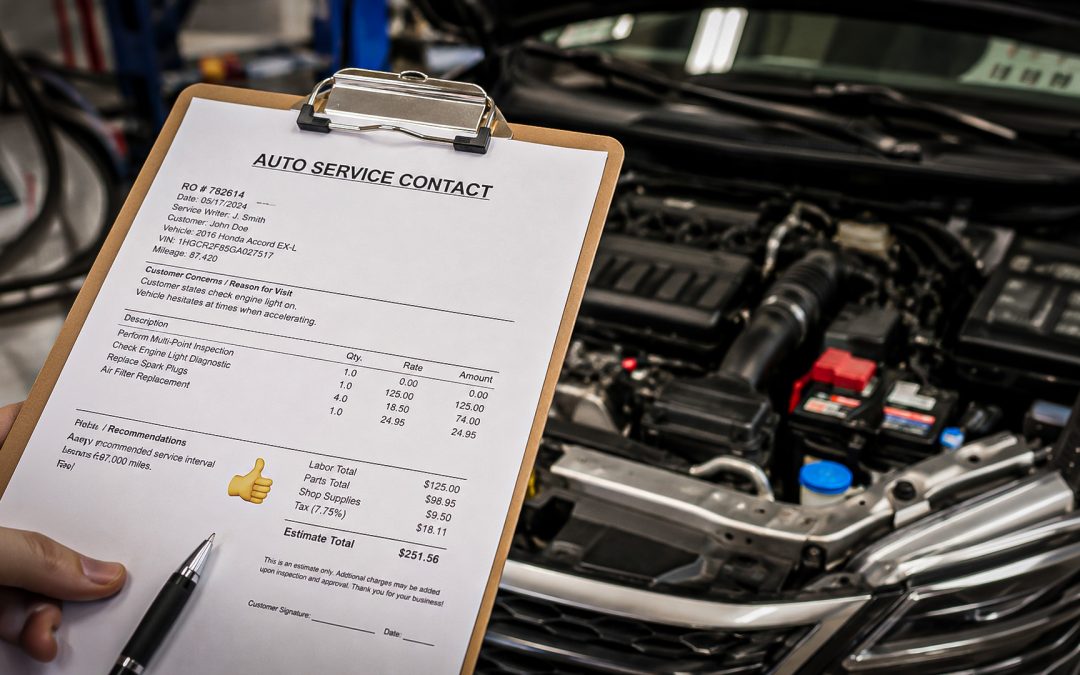
Casual communication can have formal consequences.
If you have to have them in the shop, endeavor to make politics polite.

Don’t try to (needlessly) upsell me.
Participation in this forum is subject to Dorman’s Website Terms & Conditions. Please read our Comment Policy before commenting.