Maybe there’s a reason “upsell” has become a dirty word—and it might be your fault.

Service Writing Tip: Justify Your Recommendations
read more



Maybe there’s a reason “upsell” has become a dirty word—and it might be your fault.
Whether you’re turning wrenches for a living as your nine to five — or just for fun as your five to nine — chances are you’ve needed to get a brake caliper out of the way and keep it there for a while. As most of you should already know, hanging a brake caliper from the hose is a no-no and can damage the brake hose itself or the fittings attached to it.
While there are specialized tools out there to get this job done, what do you do if a) you don’t have them, b) you have them but they’re already in use on another vehicle, or c) you’d rather make a helpful tool than toss more things in the landfill?
Meet the non-metallic sheathed cable method!
By snipping off a footlong section or so (depending on your needs and the size of the caliper) and removing the individual wires from the heavy protective sheathing, you’re left with three or four strands of sturdy yet ductile copper to be bent and twisted into whatever shape will help you get the job done. Typically, an easy place to hang a front caliper is through the mounting hole or the caliper body itself, then up and around one of the coils of the coil spring or an upper control arm. In the rear, it may be a bit trickier, but a rigid suspension arm will often do the trick. It’s important to mention that looping alone may not be enough, especially on those heavier brake calipers, but giving the copper an extra twist or two should secure it with no worries.
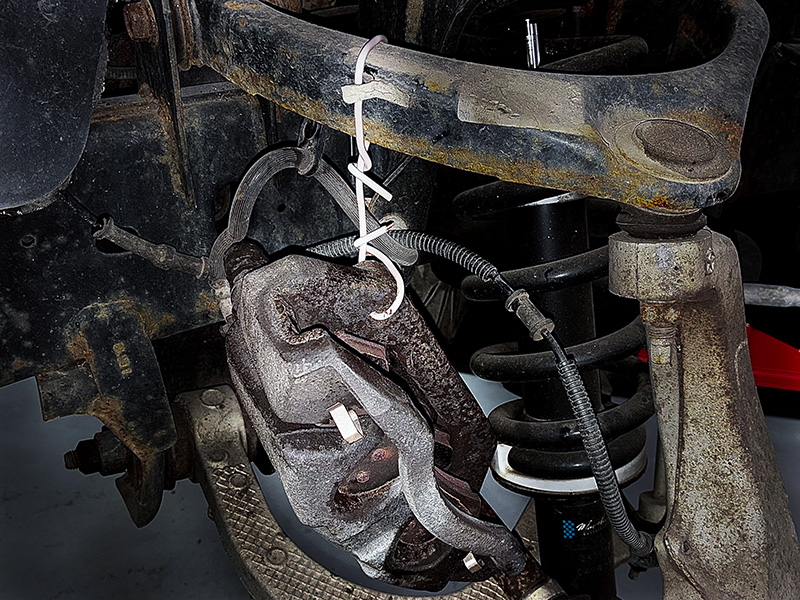
This is a great trick I’ve used both as a working tech and now as a DIYer. I can always count on opening my toolbox drawer and finding multiple strands, all cut to different lengths, that have held hundreds of brake calipers, import and domestic, with peace of mind.
Is this a trick you’ve used before, or one that you plan on using in the future? Let us know!
The articles and other content contained on this site may contain links to third party websites. By clicking them, you consent to Dorman’s Website Use Agreement.
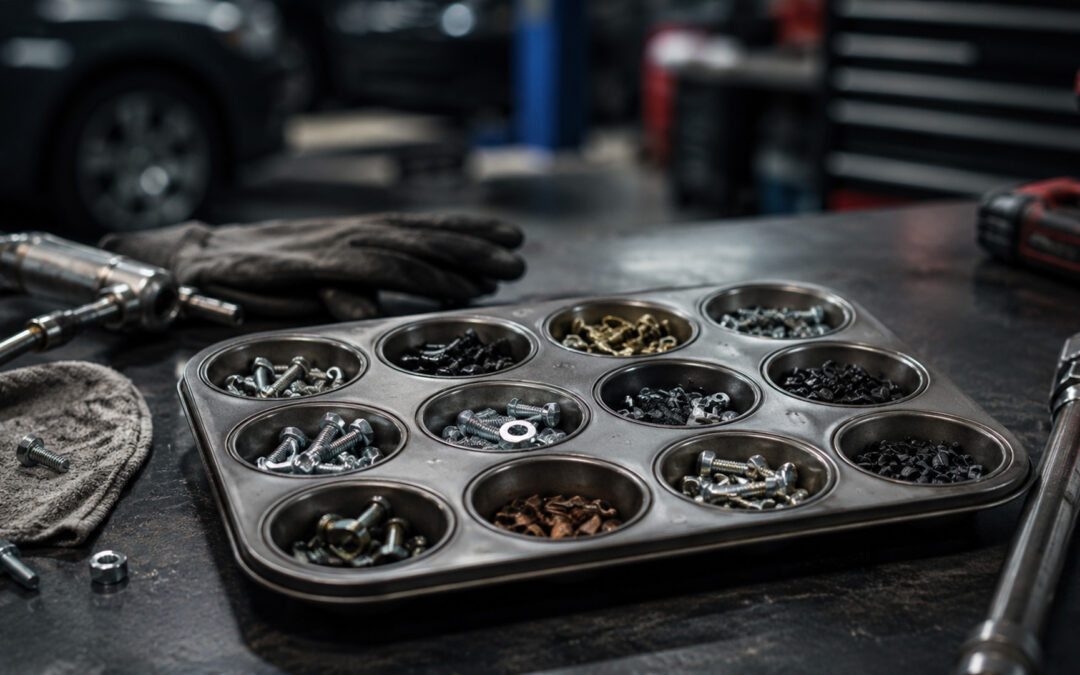
Keeping track of small parts during a job can be tricky, but there’s a cheap and effective way to solve that problem.
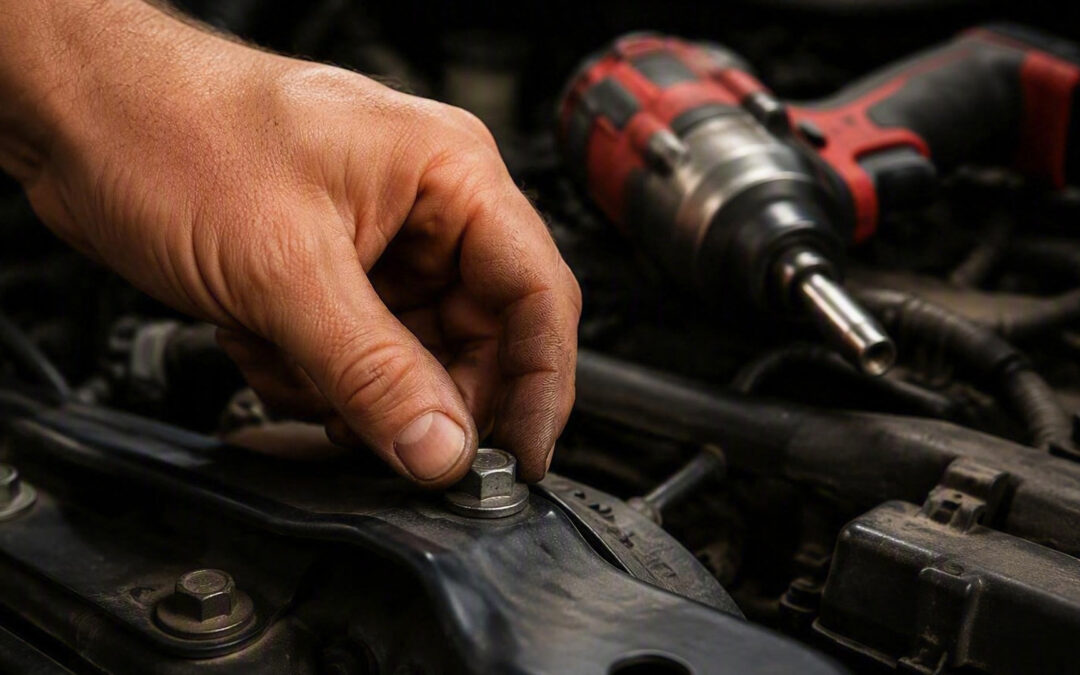
Cross-threading or stripping a fastener can bring progress to a halt in an instant. Start by hand-threading fasteners.

Every car you touch is full of it, but it’s not in any service manual. Here’s the working tech’s guide to plasticizers: why plastic goes soft, sticky, chalky, and cracked, what actually happens when you hit trim with a torch, and why your customer’s dash keeps fogging the windshield.

Ever get up to your elbows in a diagnostic problem, only to wind up right where you started an hour later?
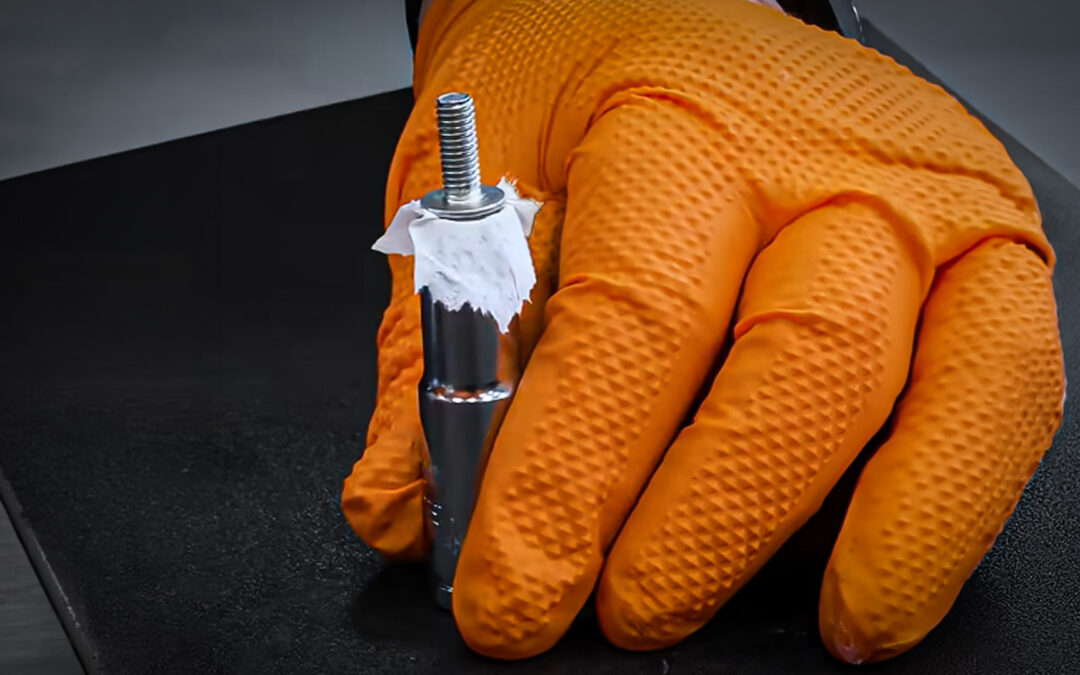
Having trouble hanging onto a nut or bolt with a socket?
Are you making any of these three common mistakes?
Participation in this forum is subject to Dorman’s Website Terms & Conditions. Please read our Comment Policy before commenting.