Maybe there’s a reason “upsell” has become a dirty word—and it might be your fault.

Service Writing Tip: Justify Your Recommendations
read more



Maybe there’s a reason “upsell” has become a dirty word—and it might be your fault.
Throughout the history of automotive manufacturing, there have been some notorious flops. Cars such as the Yugo GV, DMC DeLorean, Ford Pinto, and Pontiac Aztek are still remembered by many as symbols of automaker stumbles. Today, I want to talk about a design element that became synonymous with one car’s failure: the “horse collar” grille on the Ford Edsel.
The Edsel was an attempt by Ford to increase their foothold in the mid-price market. At the same time, they intended to make an experimental car that looked different from anything else on the road. To that end, Ford code-named the car the “E car” during its internal prototype phase. Marketing research and development on the Edsel began in 1955. According to Ford, they spent over $300 million on the car and boasted that the Edsel benefited from the most intense engineering, design refinement, and technological advancement that had ever been put into a product. In fact, Ford saw so much promise in the new car that it was named for Henry Ford’s own son, Edsel. The Edsel was introduced by Ford on “E Day,” September 4, 1957.
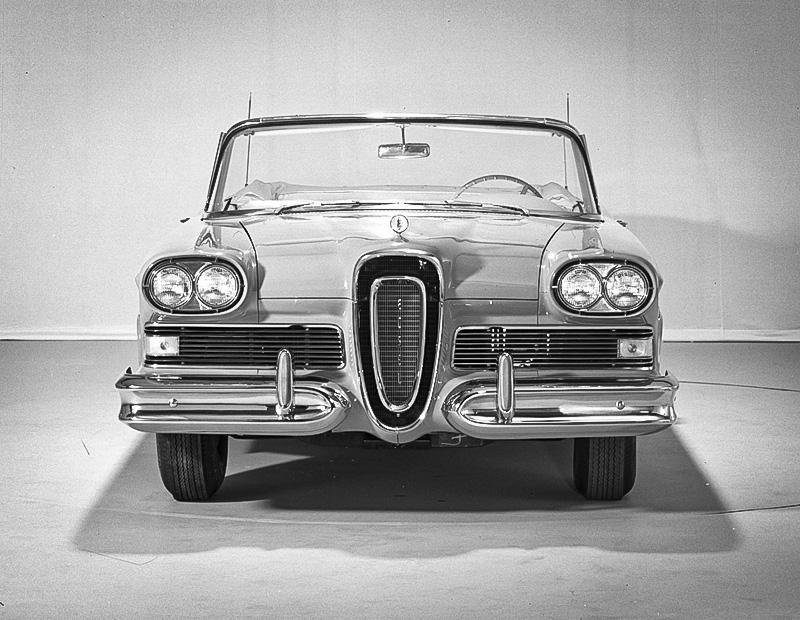
1958 Edsel Citation convertible concept car with “horse collar” grille. Source: Ford Heritage Vault.
The design element of the Edsel that stood out the most was the large grille. Ford’s designers decided on a vertical motif for the front of the car, according to Thomas E. Bonsall’s 2002 book, Disaster in Dearborn. As the book’s title implies, the end result did not look like what the designers intended. The original chief designer on the Edsel, Roy Brown, had envisioned a thin, almost fragile opening in the center. Engineers feared engine cooling problems, so they vetoed the intended design and proposed a ring design instead. Ford executive Ernest Breech then insisted on making the grille wider and taller, leading to the “horse collar” appearance. The public almost immediately began deriding this design element, with the name “horse collar” becoming the most prominent. Time magazine quipped that it looked like “an Oldsmobile sucking a lemon.” Ford attempted to improve the grille for the 1959 models, but it didn’t help to change the public’s perception of the car. A 1960 model was briefly produced, but by 1961, the car was completely discontinued, having lasted less than three years.
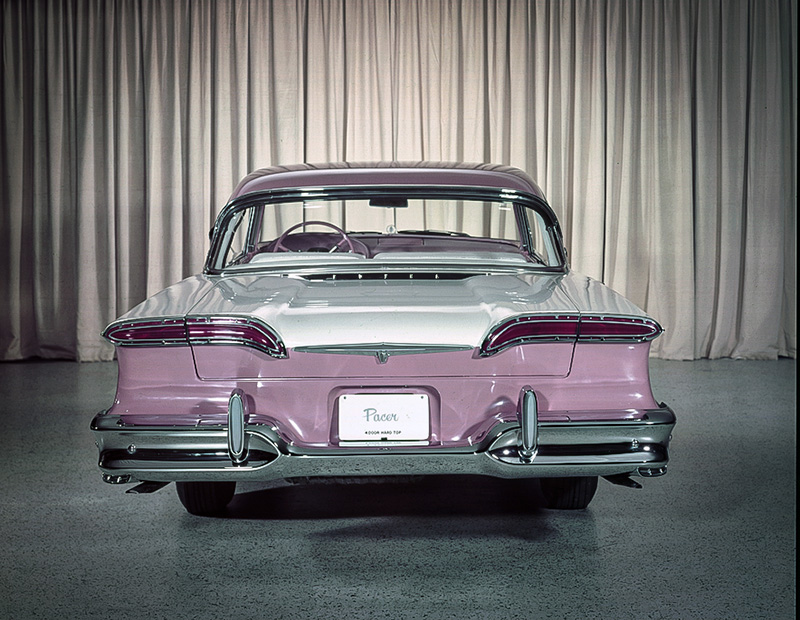
Not every angle of the Edsel was bad. The tail lights on the 1958 sedans are amazingly modern. Source: Ford Heritage Vault.
Of course, the grille wasn’t the only thing that contributed to the Edsel’s demise. In 2017, Hagerty wrote about 10 reasons that the Edsel floundered, including a recession, confusing pricing, and corporate discord. In addition, the Edsel seemed to contradict the prevailing automotive design elements of the time. Chrysler’s “forward look” was popular with the contemporary car-buying public, and the Edsel flew directly in the face of that.
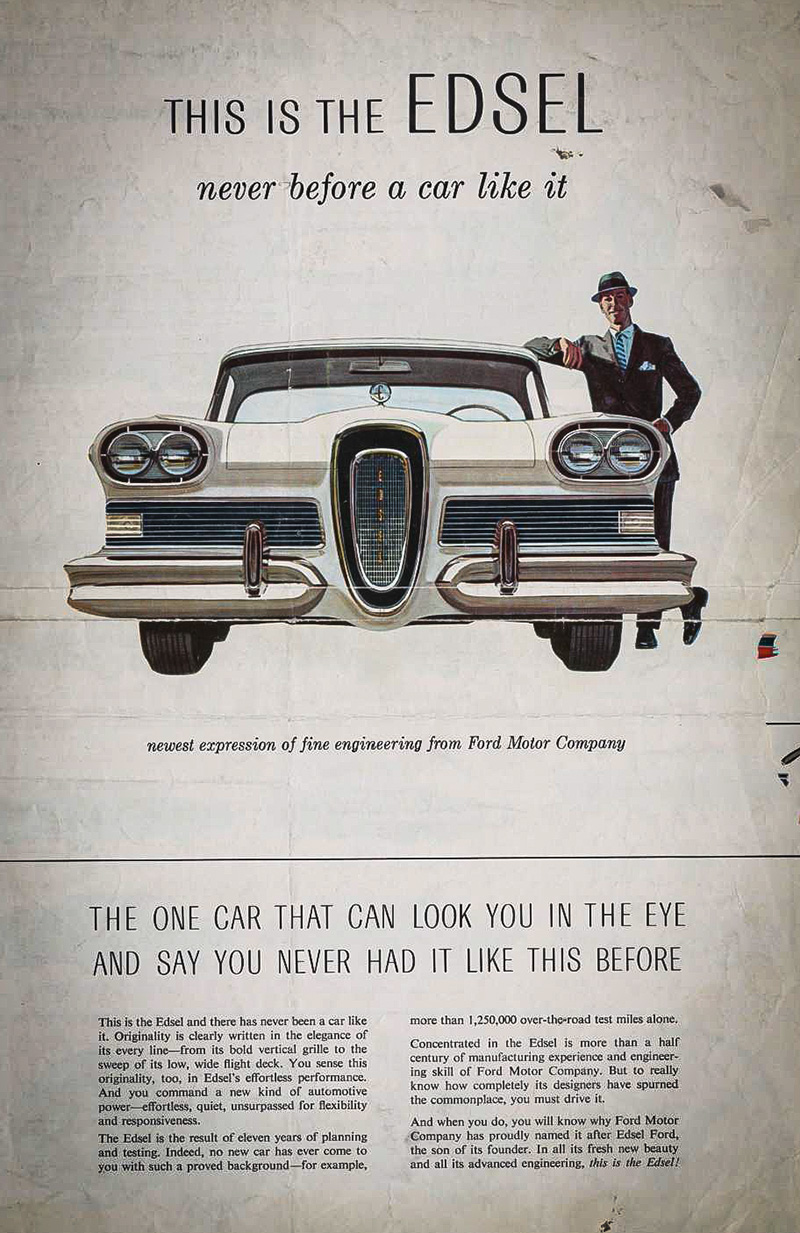
Cover of 1958 Edsel Vehicle Lineup brochure. Source: Ford Heritage Vault.
Although the “horse collar” grille was the element of the Edsel that the public latched on to the most, it was merely a symbol of many headwinds that faced the vehicle. Today, there are collectors and owners clubs that focus specifically on the Edsel, proving unequivocally that beauty truly is in the eye of the beholder.
The articles and other content contained on this site may contain links to third party websites. By clicking them, you consent to Dorman’s Website Use Agreement.
EVs and hybrids that time forgot.

It’s not just you. This job ain’t what it used to be.
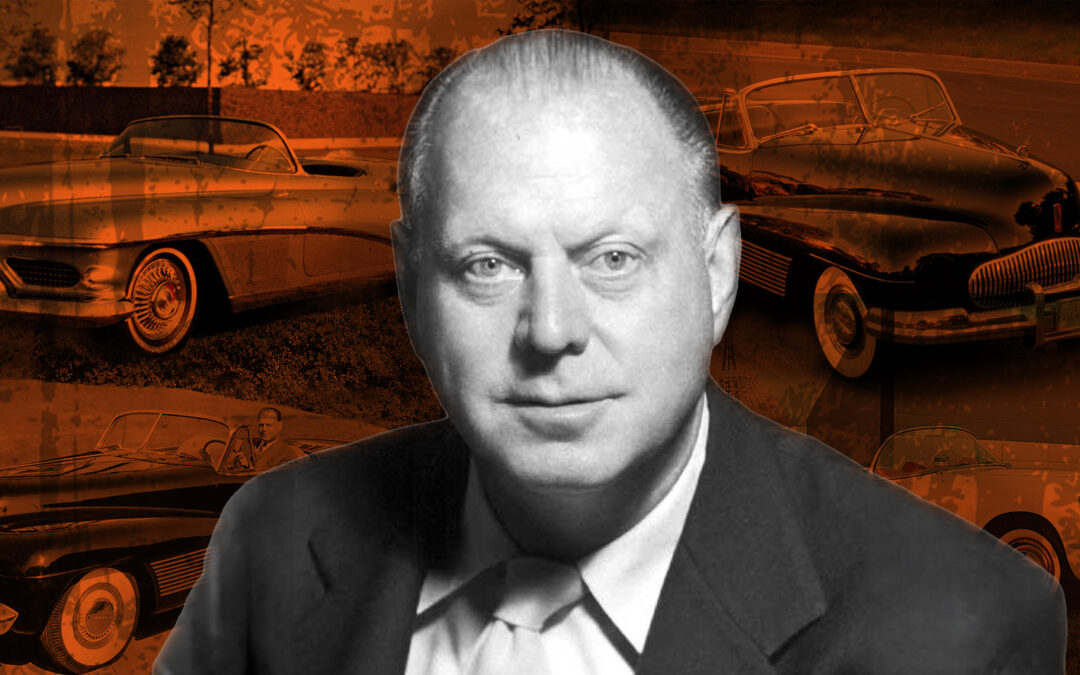
As General Motors’ first design chief, Harley Earl transformed the automobile from a machine into a cultural icon.

Aging roads and infrastructure might play a role in planning your shop’s future business.
You may not think it, but automotive lighting has come a long way.

Here are eight cars that paved the way for modern engines.
Participation in this forum is subject to Dorman’s Website Terms & Conditions. Please read our Comment Policy before commenting.