Maybe there’s a reason “upsell” has become a dirty word—and it might be your fault.

Service Writing Tip: Justify Your Recommendations
read more



Maybe there’s a reason “upsell” has become a dirty word—and it might be your fault.
Anyone who knows me is aware I am slavishly beholden to the concept of picking up a book before picking up a wrench. Heck, that’s the cornerstone of Dorman’s own Training Center, and I’ve been preaching that for a long time. I’m not the only person beating that drum. But what happens when you can’t get the information you need?
Now, I have a fair amount of hot-rodding in my blood, and that certainly deviates from factory guidance—at that point, a service manual becomes more of a stepping stone than anything else. Anyone who modifies vehicles knows that there is a fair amount of time lost trying and testing new things.
Enter this article. I wanted to pen something of a confidence-builder for newer technicians since critical information is missing or incorrect at times, and that’s normal, unfortunately. The inspiration for this piece (written) was a piece (mechanical) that I came across in my toolbox:
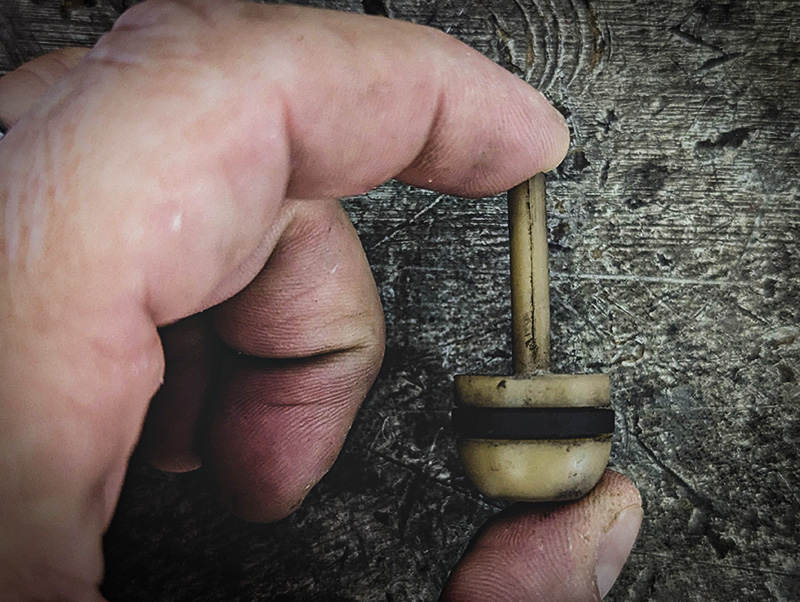
I’m a packrat. I save stuff. I have a whole bin of parts that have broken in interesting or very typical ways to serve as educational tools, and I also believe there are lots of lessons hiding in the plain and workaday items that surround us. The piece you see above I have been moving around the country since 2006.
I was a fresh tech who had just come off the lube rack into my own mechanical repair bay. The dispatcher at our dealer had been throwing anything at me he thought I could handle, so a transmission service for the (then pretty new) 4R70W residing in a cop car or F-150 seemed to be something I should have been able to hit out of the park. I dropped the pan, dumped the fluid, and that little guy was laying in the pan.
Being of average intelligence, I looked up, into the valve body, and couldn’t see where it might have come from. I remember the vehicle not standing out as behaving strangely during my brief test ride. I was stumped and starting to get a little nervous. The parts fiche showed nothing like this in the pan or surrounding areas.
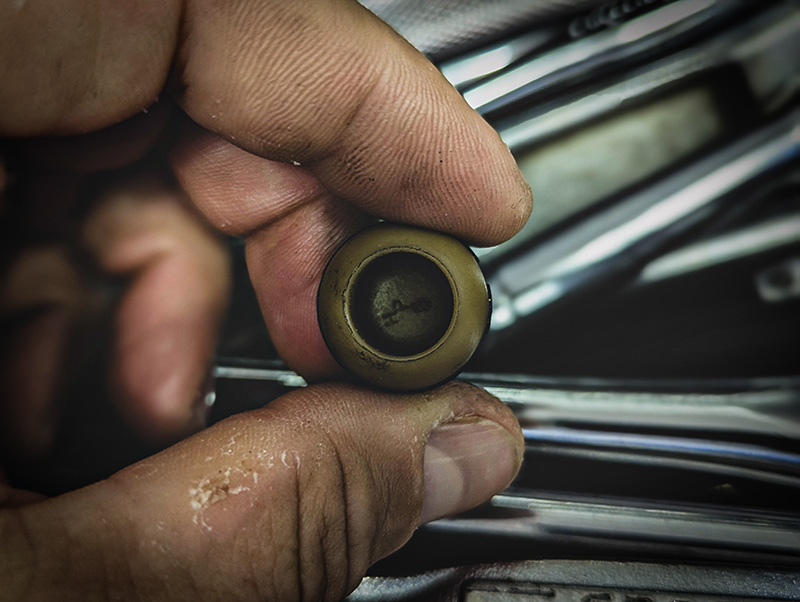
I was starting to sink too much time into what should have been an in-and-out service. I couldn’t figure out how it was oriented in service or what function the hollow in the round end served. I started becoming a bit frantic, thinking I’d knocked this piece free and possibly broken it, and I couldn’t even find out what part to ask the parts counter for!
So I approached an older technician.
In retrospect, he was kinder than I probably deserved. At first, he feigned deep concern, but in such a ham way that I realized this was not going to be a major problem. And then he educated me on what was going on. (I know a few of you have run into this and are probably laughing already.)
See, that plug was installed in the transmission dipstick tube when the trans was built. (The round end faces down.) It kept contaminants from entering the assembly. When the transmission was mounted and moved down the line, the dipstick was inserted and instead of removing the plug by hand, it was simply pushed straight through where it laid in the bottom of the pan for an unsuspecting mechanic like me to find during its first service.
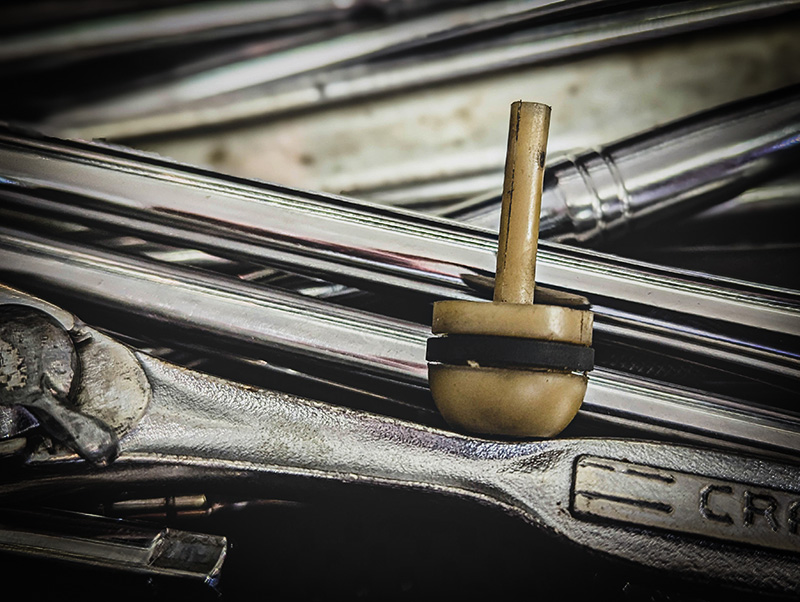
That’s why it wasn’t in the book.
In my years after, I found instances of conflicting or missing factory information, misprints, updates to materials I had, and out-and-out errors.
That’s normal. It’s not routine, but it’s not out of the realm of possibility by a long shot. And that’s where a mechanic needs to stop and think. Trust, but verify, as they say. Feel free to laugh at my lack of knowledge, and feel free to share your own story; we all have them. This is the way things go sometimes. The OEs might leave you high and dry every now and then (not often, thankfully), but when it happens, you’re not alone. We’ve all been there before, and even the oldtimers are stuck right there with you every now and then.
Stay cool and don’t be afraid to go digging to get the knowledge you need. And be nice to a curmudgeonly veteran tech in a nearby bay—it pays off sometimes.
The articles and other content contained on this site may contain links to third party websites. By clicking them, you consent to Dorman’s Website Use Agreement.

Need to make a secure electrical connection or repair with heat shrink tubing on the outside?
Need to make a secure electrical connection or repair with heat shrink tubing on the outside?

Don’t waste time with jumbled electrical connectors under the hood.
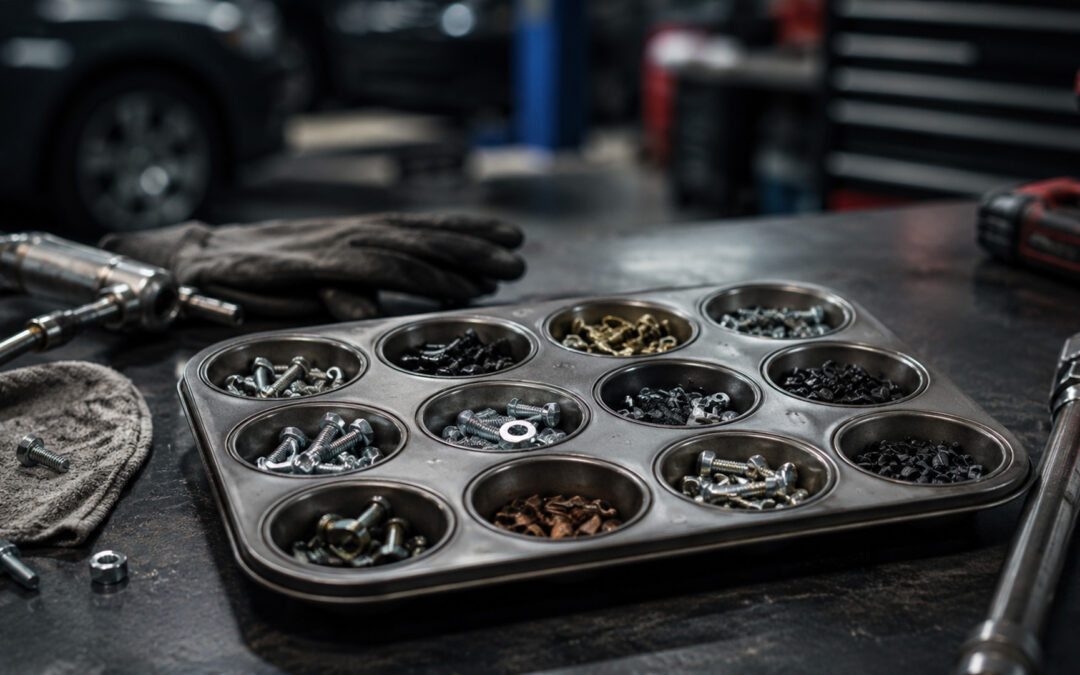
Keeping track of small parts during a job can be tricky, but there’s a cheap and effective way to solve that problem.
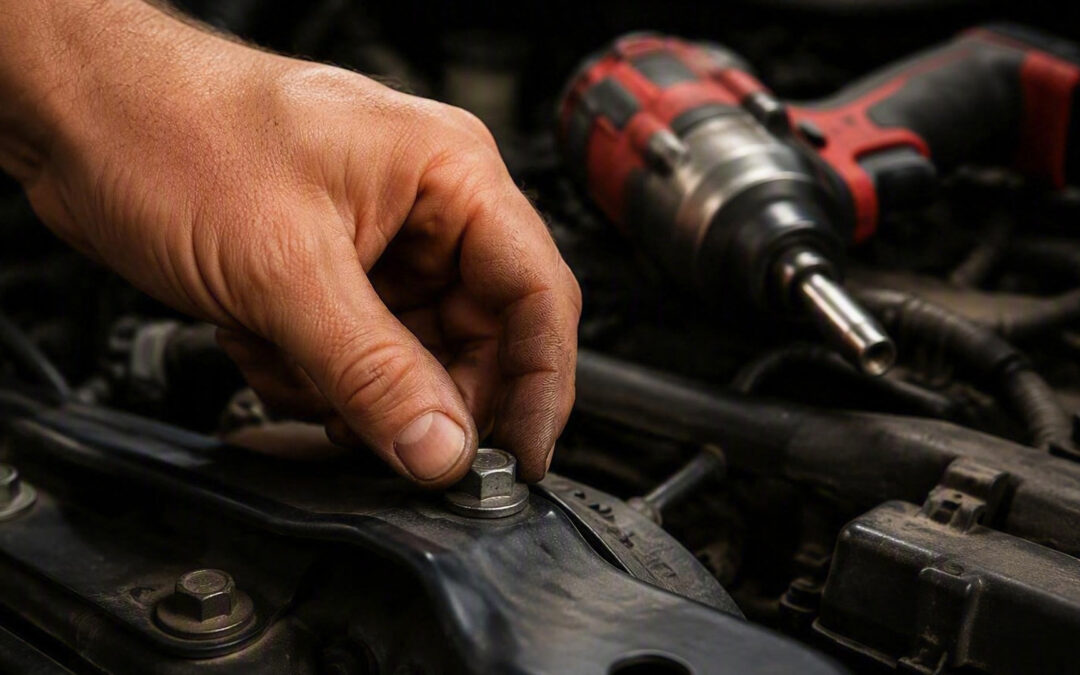
Cross-threading or stripping a fastener can bring progress to a halt in an instant. Start by hand-threading fasteners.

Every car you touch is full of it, but it’s not in any service manual. Here’s the working tech’s guide to plasticizers: why plastic goes soft, sticky, chalky, and cracked, what actually happens when you hit trim with a torch, and why your customer’s dash keeps fogging the windshield.
Participation in this forum is subject to Dorman’s Website Terms & Conditions. Please read our Comment Policy before commenting.